New CSA B335 Standards 2025: What Changes Mean for Your RT Forklift Certification
What the CSA B335:25 standard changes for rough terrain forklift certification: risk assessment, online and VR options, trainer retraining and next steps.
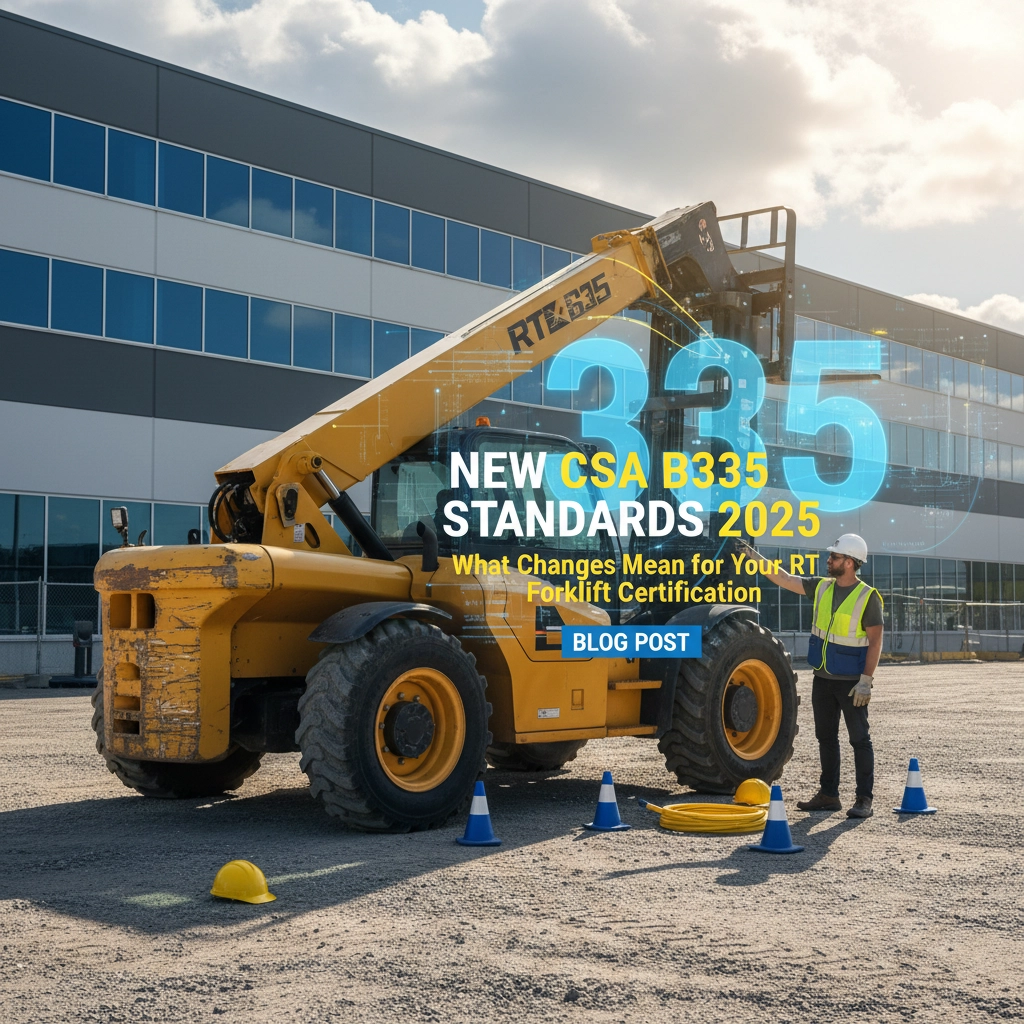
The Canadian Standards Association just dropped CSA B335:25 in May 2025, and it's bringing significant changes that First Nations employment and training departments across Manitoba need to understand. Now, in May 2026, CSA B335:25 standards are the industry norm, and communities planning operator certification need to work from the current standard. This isn't just another regulatory update: it's a complete overhaul that directly impacts how your community members get certified on rough-terrain (RT) forklifts and maintain those critical qualifications.
If you're managing workforce development programs or overseeing industrial training in your community, these changes affect your training budgets, certification timelines, and most importantly, the safety of your operators working in construction, resource extraction, and industrial sites.
Last updated on October 1, 2026
What's new in 2026
This post has been refreshed to reflect current requirements and broader compliance developments that may affect training and worksite planning:
- Manitoba’s construction safety rule change is now an upcoming deadline to watch for larger community projects. M.R. 26/2026 was registered on March 20, 2026 and comes into force on April 1, 2027. It removes the construction site safety exemption for commercial, industrial or institutional construction and renovation sites with more than 25 workers on site at any one time, or buildings over 600 m2 or more than three storeys, and it adds prime contractor duties under section 4.7. For communities planning bigger builds, this matters now because project planning, contractor coordination, and training expectations should be lined up before the deadline.
- Mandatory menstrual product access is now a live workplace requirement in Manitoba. As of September 1, 2026 under M.R. 19/2026, provincially regulated workplaces must provide free tampons and pads, along with covered disposal containers near each toilet. While this is not specific to RT forklift certification, it is now part of worksite readiness and workplace compliance.
- CSA B335:25 standards are now the industry norm, with clearer options for remote delivery. Online and virtual reality simulation are now recognized delivery and evaluation methods under Clause 6.1.2, which can lower travel and equipment-transport costs for remote communities. The standard also puts stronger emphasis on risk assessment, expects trainers to retrain at three-year intervals under Clause 7.2, and keeps the operator certification validity cycle at three years.
- Enforcement remains active across all kinds of employers. On March 27, 2026, Manitoba Natural Resources and Indigenous Futures was convicted after a 2022 fatal ATV rollover, with three Workplace Safety and Health contraventions and a $100,000 fine. It is a strong reminder that operator instruction, safe work procedures, and documentation are enforced for every kind of employer.
- Manitoba’s mining and critical minerals expansion is increasing the value of current-standard certification. As of September 2026, growth in mining, northern infrastructure, and critical minerals activity is driving demand for certified equipment operators while community training capacity still lags. For community members, training that reflects the current standard can be a real competitive advantage.
What's Actually Changed in CSA B335:25
Now that CSA B335:25 is the accepted industry baseline in 2026, the focus has shifted from awareness to implementation. Communities and training departments should make sure current training plans, procurement decisions, and operator evaluations align with this standard.
The new standard replaces CSA B335-15 with several game-changing updates that modernize forklift safety requirements. Here's what matters most for your programs:
Enhanced Risk Assessment Requirements: Every worksite now needs stronger hazard identification and risk assessment procedures specific to RT forklift operations. This means your operators need training that goes beyond basic equipment handling: they need to understand site-specific risks in mining, forestry, construction, and other industries where your community members work.
Updated Equipment Classifications: Rough-terrain forklifts now have more precise classification standards. The previous broad categories have been refined to address specific RT equipment types, terrain challenges, and operational environments that are common in northern Manitoba worksites.

Technology Integration: CSA B335:25 now recognizes online and virtual reality simulation as delivery and evaluation methods under Clause 6.1.2. For remote First Nations communities, this can reduce travel costs, lower equipment-transport needs, and make it easier to start training locally before hands-on validation.
Stricter Trainer Qualifications: Training providers must meet enhanced qualification standards, and trainers are expected to retrain at three-year intervals under Clause 7.2. This protects your investment in certification programs by helping ensure instructors stay current with the standard.
Impact on RT Forklift Certification for Your Community
Rough-terrain forklifts operate in challenging conditions that mirror many worksite environments in Manitoba: uneven ground, outdoor conditions, variable weather, and demanding terrain. The updated standards specifically address these operational realities.
Certification Validity Remains Three Years: Your operators still get three years from their initial certification date before requiring refresher training and re-evaluation. Even with the new delivery options and trainer retraining expectations, the operator certification validity cycle remains three years. This timeline helps with workforce planning and training budget forecasting.
More Comprehensive Training Content: The new standard requires deeper coverage of load handling, terrain navigation, stability principles, and hazard recognition. This means longer initial training programs, but operators emerge better prepared for real-world challenges.
Enhanced Pre-Use Inspection Requirements: Operators now need more thorough pre-use inspection training, particularly important for RT equipment that faces harsh conditions in mining, logging, and construction environments.

What This Means for First Nations Employment and Training Departments
These changes create both challenges and opportunities for community workforce development programs:
Training Investment Planning: Initial certification programs will likely require additional hours, affecting per-person training costs. However, the three-year validity period means you can plan training cohorts and budget cycles effectively.
Partnership Opportunities: The enhanced trainer qualification requirements mean working with established, certified training providers becomes even more critical. Look for providers who understand both the new standards and the specific employment pathways your community members pursue.
Technology Advantages: VR and simulation provisions could reduce travel costs for remote communities. Instead of transporting RT equipment to your location, preliminary training phases could happen locally with simulation, followed by hands-on validation.
Workforce Competitiveness: Community members certified under CSA B335:25 will meet the most current industry standards, making them more attractive candidates for mining companies, construction firms, and resource extraction operations across Manitoba.
Action Steps for Compliance
Immediate Actions (Next 30 Days):
- Review your current RT forklift training contracts and providers
- Identify which community members hold certifications expiring in the next 18 months
- Budget for potentially longer training programs under the new standard
Short-term Planning (Next 6 Months):
- Evaluate training providers for CSA B335:25 compliance and enhanced trainer qualifications
- Consider pilot programs using VR or simulation technology if available
- Update your workforce development planning to accommodate new training requirements

Long-term Strategy (12-24 Months):
- Develop relationships with employers who value CSA B335:25 certification
- Track employment outcomes for operators certified under the new standard
- Consider becoming a regional training hub if your community has suitable facilities
Benefits for Community Workforce Development
The enhanced standards create several advantages for First Nations communities investing in industrial training:
Higher Safety Standards: Community members working in dangerous industries benefit from more comprehensive safety training, reducing workplace injuries and associated costs.
Industry Recognition: CSA B335:25 certification demonstrates commitment to current best practices, strengthening relationships with major employers in mining, construction, and resource sectors.
Career Advancement: Better-trained operators often qualify for supervisor and trainer roles, creating pathways for community members to advance within companies and potentially return as trainers themselves.
Economic Development: Communities known for producing well-trained, certified operators attract more training contracts and employment partnerships with major industrial employers.
Working with Certified Training Providers
The enhanced trainer qualification requirements mean choosing the right training partner is crucial. Look for providers who:
- Demonstrate current CSA B335:25 certification and curriculum alignment
- Understand the employment landscape your community members enter
- Offer flexible scheduling to accommodate community priorities and seasonal work patterns
- Provide ongoing support for recertification and refresher training needs
Onsite Training Services maintains current certification standards and works extensively with First Nations communities across Manitoba, understanding both regulatory requirements and community-specific workforce development goals.
Planning Your Next Steps
The transition to CSA B335:25 represents an opportunity to strengthen your community's workforce development programs. Start by reviewing your current training partnerships and certification schedules. Identify community members who will need recertification in the coming year and begin planning training cohorts that maximize both cost-effectiveness and employment outcomes.
Consider reaching out to request a quote for CSA B335:25 compliant RT forklift training that meets your community's specific needs and timeline. You can also review Rough-terrain forklifts training details to confirm your current training pathway is still aligned. The investment in updated certification standards pays dividends in safer operations, better employment outcomes, and stronger relationships with industrial employers across Manitoba.

The new CSA B335:25 standard isn't just about regulatory compliance: it's about ensuring your community members have the skills, knowledge, and certifications needed to succeed in today's industrial workplace while maintaining the highest safety standards possible.
More guides
Need your operators certified?
We bring the training to your site, on your own equipment. Tell us the machines and how many operators and we reply the same business day.