5 Reasons Employers Trust Workforce Ready Graduates
Why Manitoba employers hire Workforce Ready graduates: real hands-on equipment time, safety and due diligence records, and trainers with field experience.
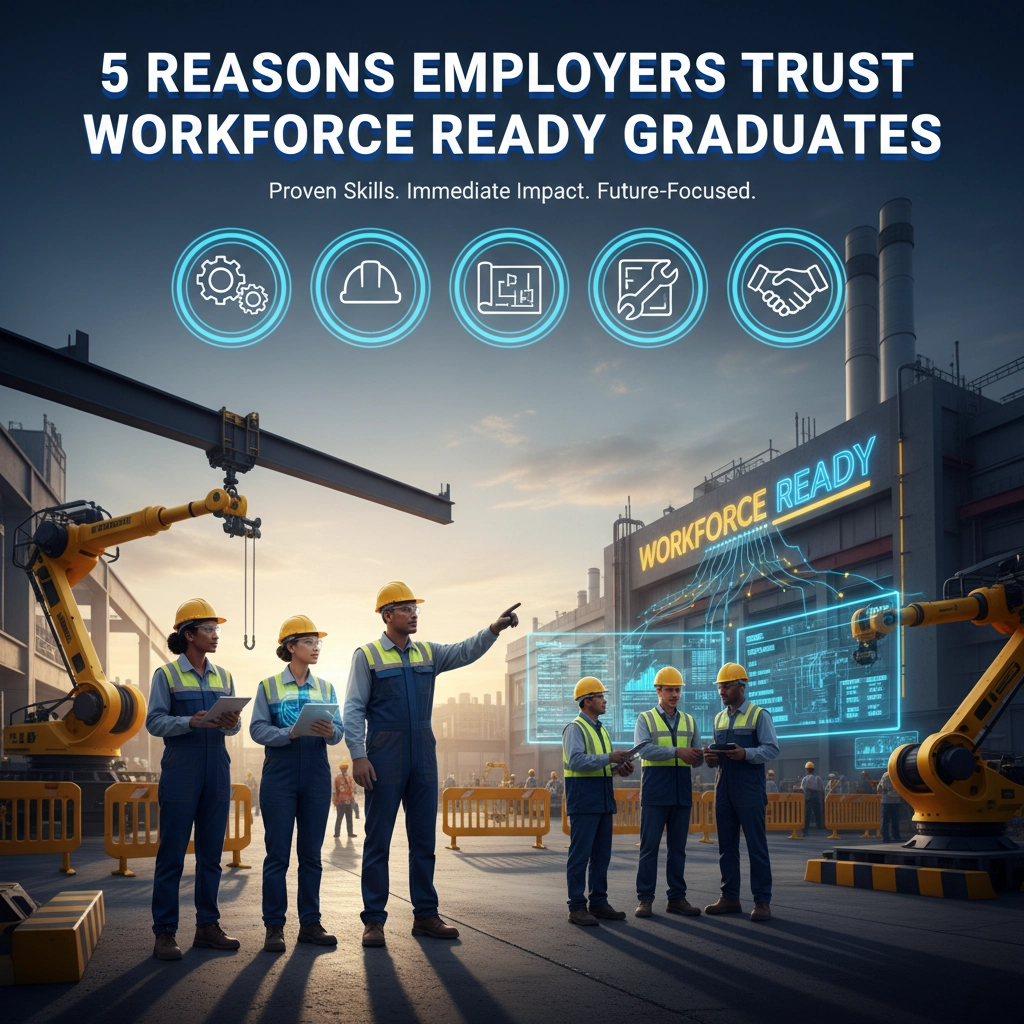
When you're hiring for heavy equipment operations, forklift work, or industrial positions, you need operators who can hit the ground running. You need workers who understand safety protocols, can handle equipment confidently, and won't require weeks of additional training. That's exactly what employers across Manitoba are finding when they hire graduates from our Workforce Ready program.
Last updated on October 1, 2026
What's new in this update
- Updated the instructor experience description to reflect combined team field experience.
- Added current Manitoba safety and due diligence references, including The Workplace Safety and Health Act, Manitoba Regulation 217/2006 Part 22, and applicable CSA standards.
- Added the May 2025 CSA B335:25 update for lift truck training, including recognition of online and virtual reality simulation, the expectation that trainers retrain every three years, and the continued requirement for hands-on practical evaluation on real equipment.
- Added Manitoba’s 2026 to 2027 regulatory timeline for large commercial, industrial, and institutional construction and renovation sites.
- Added a current Manitoba enforcement example and September 2026 labour demand context tied to mining and critical minerals growth.
First Nations communities and employers throughout the province have discovered that our training approach produces operators who are genuinely ready for the workforce from day one. Here's why employers consistently trust and prefer our graduates over candidates from other programs.
1. Comprehensive Hands-On Training with Real Equipment
Most training programs talk about hands-on experience, but few deliver the extensive practical time that employers actually need to see. Our Workforce Ready program centers around genuine equipment operation, not just theory or limited machine time.
Every student spends significant hours operating the actual equipment they'll use on job sites. Whether it's skid steers, telehandlers, forklifts, or excavators, students get comprehensive time behind the controls. This isn't a brief demonstration: it's thorough, repeated practice until competency is achieved.

Employers tell us they can immediately identify our graduates because they demonstrate confidence and competence from their first day. They understand how the machines feel, respond, and operate under different conditions. When you invest in training that prioritizes actual machine time, you get operators who don't need hand-holding once they're on your job site.
The difference shows immediately. While candidates from other programs might hesitate or require supervision, our graduates step into equipment with the assurance that comes from genuine experience. They've already worked through the learning curve during training, not on your time and your equipment.
2. Rigorous Safety Focus and Due Diligence Documentation
Safety isn't just a checkbox in our program: it's the foundation of everything we teach. Employers trust our graduates because they understand that proper safety training protects everyone: the operator, coworkers, and the company itself.
Our safety training goes beyond basic awareness. Students learn comprehensive inspection procedures, hazard recognition, and proper operational protocols. They understand why safety matters from both personal and legal perspectives. This includes understanding how Criminal Code negligence charges can result from unsafe operation and how proper training supports due diligence.
That due diligence framework matters in Manitoba. Our approach aligns with The Workplace Safety and Health Act and Manitoba Regulation 217/2006, including Part 22 for powered mobile equipment, along with the applicable CSA standards for the equipment being used. For lift truck training, the current operator standard is CSA B335:25, released in May 2025. It replaced CSA B335-15, recognizes online learning and virtual reality simulation for instruction and evaluation, and expects trainers to retrain every three years. At the same time, hands-on practical evaluation on real equipment is still required.
The regulatory picture is also changing. Manitoba Regulation 26/2026 was registered on March 20, 2026 and comes into force on April 1, 2027. It removes the construction site safety exemption for commercial, industrial, or institutional construction and renovation sites with more than 25 workers on site at any one time or buildings over 600 m2 or more than three storeys, and it adds prime contractor duties under section 4.7. For communities preparing people for larger projects, that means documented operator training and site safety systems will matter even more.
Employers particularly value the documentation we provide. When you hire one of our graduates, you receive complete training records that demonstrate proper instruction was provided. This documentation is crucial for liability protection and regulatory compliance. You can demonstrate due diligence to inspectors, insurance companies, and in any legal situations that might arise.
Recent enforcement also shows why this matters. On March 27, 2026, Manitoba Natural Resources and Indigenous Futures was convicted after a 2022 fatal ATV rollover, with three Workplace Safety and Health Regulation contraventions and a $100,000 fine. Cases like that remind employers and communities that safe procedures, proper training, and documented competency are not optional.

The safety mindset we instill becomes second nature. Our graduates don't cut corners or skip safety steps because they understand the real consequences. They perform daily inspections properly, follow lockout procedures, and maintain awareness of their surroundings. This translates directly into reduced workplace incidents and lower insurance costs for employers.
3. Real Workplace Simulations and Practical Scenarios
Training in controlled environments only goes so far. Employers trust our graduates because we expose students to realistic workplace conditions during their training. We simulate the challenges and situations they'll actually encounter on job sites.
Our training incorporates variable terrain, different load types, weather considerations, and time pressures that mirror real work environments. Students learn to operate equipment in practical scenarios, not just ideal conditions. They practice maneuvering in tight spaces, working around obstacles, and handling the unexpected situations that arise in actual work settings.
This realistic training approach means employers get operators who can adapt to their specific workplace requirements quickly. Whether it's a construction site, warehouse, manufacturing facility, or band-operated project, our graduates have experience with the types of challenges they'll face.

We also incorporate communication and teamwork elements into training scenarios. Students learn to work effectively with spotters, understand hand signals, and coordinate with other equipment operators. These collaborative skills are essential in most workplaces but often overlooked in basic certification programs.
4. Experienced Trainers with Proven Industry Background
The quality of instruction makes all the difference in operator training. Employers trust our graduates because they know our team brings extensive combined field experience to every class. This isn't academic knowledge: it's practical wisdom gained from real equipment operation, job site problem-solving, and training delivery across different work environments.
Our trainers understand what employers need because our team has worked in the field and built its approach around real workplace expectations. They know the difference between operators who look good during testing and operators who can handle the demands of real work environments. This experience shows in the quality of graduates we produce.
The training approach reflects real-world priorities. Students learn not just how to operate equipment, but how to be valuable employees. This includes understanding productivity expectations, equipment care, and professional workplace behavior. Our trainers share insights about career advancement, safety leadership, and the skills that lead to long-term success in heavy equipment operation.
Employers often tell us they can identify our graduates by their professionalism and work ethic. These qualities come from trainers who emphasize the complete package of skills needed for workforce success, not just basic operational competency.
5. Documented Employment Outcomes and Success Rates
Numbers don't lie, and our employment outcomes speak for themselves. Employers trust our graduates because they see consistent results from our program. When First Nations bands, construction companies, and industrial employers hire our graduates, they typically find reliable, competent operators who contribute immediately to their operations.
We track our graduates' success rates and maintain connections with both students and employers after training completion. This feedback loop helps us continuously improve our program while providing concrete evidence of training effectiveness. Employers appreciate knowing they're hiring from a program with proven results, not just good marketing.

The feedback we receive from employers consistently highlights the same qualities: our graduates arrive prepared to work, understand safety requirements, demonstrate proper equipment handling, and integrate well into existing teams. These aren't accidents: they're the direct results of our comprehensive training approach.
When bands and employers invest in training for their community members, they want to see real employment outcomes. Our Workforce Ready program delivers those results through training that prioritizes workplace readiness over simply meeting minimum certification requirements.
That focus is especially important right now. September 2026 reporting in the Winnipeg Free Press noted that Manitoba is pushing to grow mineral production while First Nations training capacity still lags behind demand. As mining and critical minerals projects ramp up, employers are actively looking for certified operators now. Community-based training that builds practical, documented competency can help people step into those opportunities faster and with more confidence.
Ready to See the Difference for Yourself?
If you're an employer looking for qualified operators, or if you're involved with employment and training programs for First Nations communities, we invite you to learn more about our Workforce Ready approach. Our graduates consistently demonstrate the competence, safety awareness, and professionalism that employers value because our training is designed around real workplace needs.
For more information about our operator training programs or to discuss training options for your community or organization, contact us today. We're committed to producing operators who are genuinely ready for the workforce from day one.
When you need operators you can trust, choose graduates from a program that prioritizes the qualities employers actually value. That's the Workforce Ready difference.
More guides
Need your operators certified?
We bring the training to your site, on your own equipment. Tell us the machines and how many operators and we reply the same business day.