Aerial Lift Training in Manitoba: Avoiding Stop Work Orders and Penalties
Avoid stop work orders and fines with aerial lift training in Manitoba: CSA B354, fall protection, equipment-specific skills and records inspectors want.
Last updated on October 1, 2026
What’s new in this update
- Rewrote the menstrual product compliance section to reflect that M.R. 19/2026 took effect on September 1, 2026, including free tampons and pads, covered disposal containers near each toilet, and potential fines up to $5,000 for non-compliance.
- Corrected the M.R. 26/2026 timeline and scope: registered March 20, 2026, in force April 1, 2027, with planning implications for larger commercial, industrial, and institutional construction and renovation sites and new prime contractor duties under section 4.7.
- Added the March 27, 2026 conviction of Manitoba Natural Resources and Indigenous Futures after a fatal 2022 ATV rollover to reinforce the cost of missing operator instruction and safe work procedures.
- Refreshed standards references so aerial work platform training in Manitoba aligns with the Self-Elevating Work Platforms Training Program Standard and CSA B354, while lift truck-related content now references CSA B335:25.
Winnipeg. 9:10 a.m. on a clear February morning. A maintenance crew raises a scissor lift to change a high-bay light. Twenty seconds later, the platform jolts, an unsecured gate swings, and the operator—new to the site—reaches for controls he doesn’t fully understand. No one is hurt, but the near-miss triggers a call to Manitoba Workplace Safety and Health. Inspectors arrive, spot a missing pre-use inspection and no documented fall protection training for the operator, and issue a stop work order.
That stop work order immediately halted production and scattered the schedule. In Manitoba, a single day shutdown can cost $5,000 to $50,000 depending on your operation size—before fines, legal fees, and reputation damage that follow.
Most aerial lift incidents that trigger enforcement action are preventable. The common thread is simple: inadequate operator training or failure to follow established procedures. For employers comparing aerial lift training Manitoba options, the right program helps control compliance risk, reduce downtime, and protect workers. Here’s how the right training shields your business from costly compliance issues and keeps your workers safe.
Manitoba employers should also note that compliance expectations continue to evolve. Recent provincial updates have increased attention on larger construction projects, workplace psychological safety, and workplace access requirements for menstrual products that are now in effect.
The Real Cost of Non-Compliance in Manitoba
Manitoba's compliance database reveals a troubling pattern of aerial lift incidents across various industries. Construction sites, warehouses, and maintenance operations frequently receive stop work orders following incidents involving scissor lifts, boom lifts, and other elevated work platforms.
Recent enforcement actions show fines ranging from $2,500 for minor training violations to over $25,000 for serious incidents involving untrained operators. One notable case involved a construction company that received a $15,000 penalty after an untrained worker operated a scissor lift without proper fall protection, resulting in a serious injury.
The most expensive outcomes usually follow missing instruction, weak supervision, or absent safe work procedures. Manitoba reinforced that point on March 27, 2026, when Manitoba Natural Resources and Indigenous Futures was convicted after a 2022 fatal ATV rollover. The employer was found guilty of three Workplace Safety and Health Regulation contraventions and fined $100,000. The case was not about an aerial lift, but the lesson applies directly to powered access equipment: if employers cannot prove proper operator instruction, practical oversight, and safe work procedures, the costs can be severe.
The hidden costs extend far beyond the initial fine:
- Lost productivity during work stoppage
- Overtime costs to make up delayed schedules
- Increased insurance premiums
- Legal expenses and administrative time
- Damage to client relationships and company reputation
- Potential criminal liability in severe cases

Understanding Manitoba's Aerial Lift Training Requirements
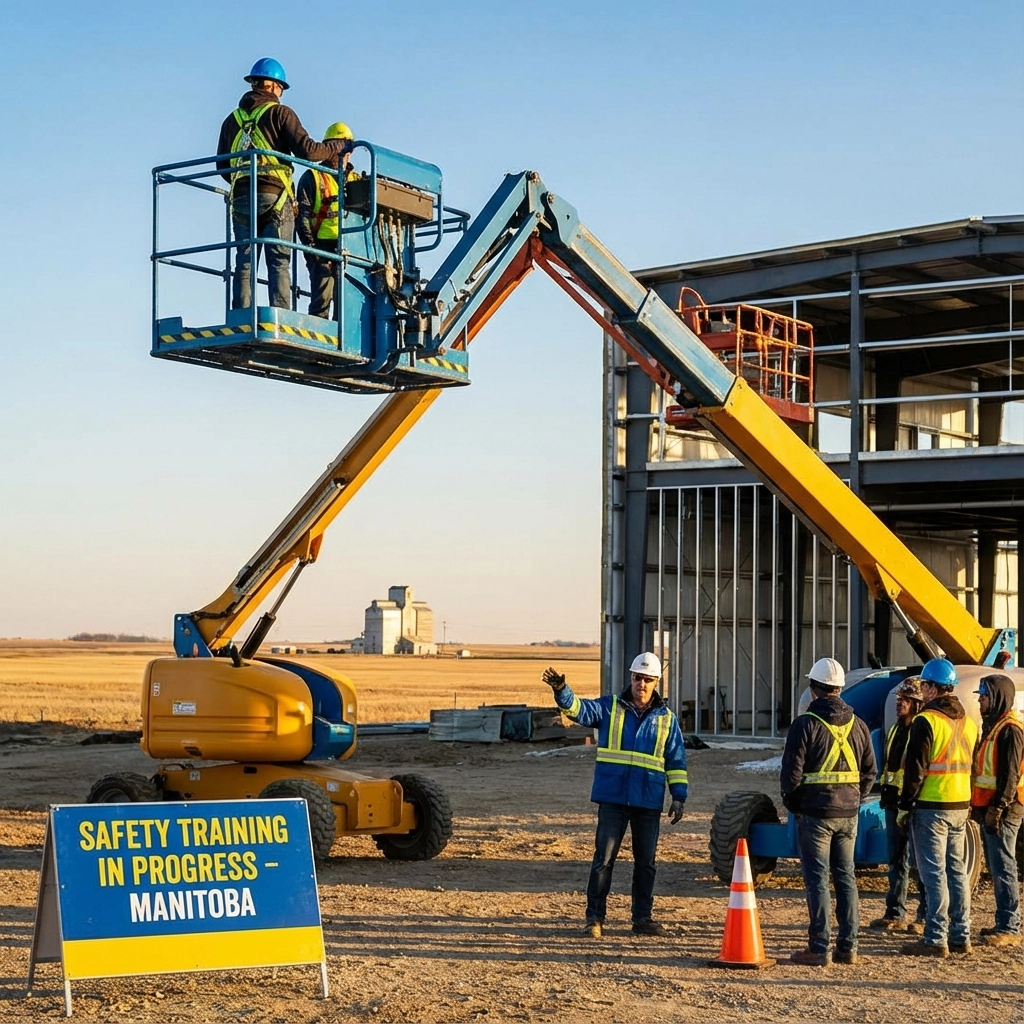
Manitoba's workplace safety legislation is clear: no one operates an aerial lift without proper training. Aerial work platform training in Manitoba aligns with the Self-Elevating Work Platforms Training Program Standard and CSA B354, which reinforces the need for formal instruction, practical evaluation, and equipment-specific competency.
M.R. 26/2026 also matters, but employers need to treat it as a planning deadline, not a current rule already in effect. The regulation was registered on March 20, 2026 and comes into force on April 1, 2027. It removes the construction site safety exemption for commercial, industrial, or institutional construction and renovation sites with more than 25 workers on site at any one time, or buildings over 600 m2 or more than three storeys, and it adds prime contractor duties under section 4.7. For affected employers, that means now is the time to prepare documentation, supervision, and aerial lift training Manitoba systems before the April 1, 2027 deadline.
The update does not reduce the need for equipment-specific instruction. If anything, it raises the importance of proving that operators have current, documented training and site-specific hazard awareness before using elevated work platforms.
Mandatory Training Components Include:
Theoretical Foundation (Minimum 3.5 Hours)
- Aerial lift terminology and components
- Legislative requirements and safety standards
- Hazard identification and risk assessment
- Pre-operational inspection procedures
- Safe operating practices and limitations
Practical Application (Minimum 3.5 Hours)
- Hands-on operation of specific equipment types
- Site-specific hazard assessment
- Emergency procedures and rescue protocols
- Proper use of personal protective equipment
- Documentation and record-keeping requirements
The training must be equipment-specific. A scissor lift certification doesn't automatically qualify someone to operate an articulating boom lift. Each type of aerial platform has unique operational characteristics and safety considerations.
Prerequisites That Can't Be Ignored
Before anyone steps foot on an aerial lift, they must complete fall protection training. This prerequisite isn't optional: it's a legal requirement that many employers overlook. Fall protection training covers:
- Proper harness inspection and fitting
- Anchor point selection and evaluation
- Fall arrest system components
- Rescue planning and emergency procedures
Skipping this foundational training creates immediate liability. Inspectors specifically look for fall protection compliance, and violations trigger automatic stop work orders.
Common Training Gaps That Lead to Violations
Through years of incident investigation, Manitoba Workplace Safety and Health has identified recurring training deficiencies:
Inadequate Site-Specific Training
Generic training programs often miss site-specific hazards. A warehouse operation faces different risks than an outdoor construction site. Your training must address actual working conditions, overhead obstacles, ground conditions, and weather considerations specific to your workplace.
Missing Emergency Procedures
Many operators receive basic operational training but lack emergency response skills. When equipment malfunctions or workers become stranded, untrained responses can worsen the situation. Proper training includes equipment lowering procedures, rescue protocols, and emergency communication systems.
Insufficient Instructor Qualifications
Manitoba requires specific instructor-to-learner ratios: 15:1 for theory and 2:1 for practical training. Aerial work platform training in Manitoba should also align with the Self-Elevating Work Platforms Training Program Standard and CSA B354. For lift truck-related training programs, employers should now reference CSA B335:25, which replaced the 2015 edition and recognizes online and virtual reality simulation for instruction and evaluation, with trainers expected to retrain every three years. Those updates do not remove the need for qualified instructors. If anything, they reinforce that instructor qualifications and documented practical evaluation still matter most. Using unqualified instructors or exceeding required ratios creates compliance exposure.

Documentation Requirements That Protect You
Proper training documentation serves as your first line of defense during workplace inspections. Manitoba requires specific record-keeping that many employers handle inadequately:
Required Documentation:
- Individual training records with completion dates
- Equipment-specific certifications
- Instructor qualifications and credentials
- Training curriculum and materials used
- Practical assessment results and observations
- Ongoing competency evaluations
Missing or incomplete documentation often results in fines even when operators have received adequate training. Inspectors can't verify compliance without proper records, and verbal assurances carry no weight during enforcement proceedings.
Equipment-Specific Considerations
Different aerial lift types present unique training challenges and regulatory focus areas:
Scissor Lifts
Despite their perceived simplicity, scissor lifts account for numerous workplace incidents. Training must emphasize platform capacity limits, ground stability requirements, and proper positioning procedures. Many operators underestimate the importance of wheel chocks and outrigger positioning. Strong scissor lift training Manitoba programs should also cover site traffic, surface conditions, and safe access rules for indoor and outdoor work areas.
Articulating and Telescopic Boom Lifts
These complex machines require advanced operational skills. Training covers load charts, swing radius calculations, and environmental factors like wind speed. Operators must understand how boom position affects stability and capacity.
Truck-Mounted Aerial Devices
Mobile aerial equipment introduces vehicle operation considerations. Training must address setup procedures, traffic control, and coordination between equipment operators and ground personnel.
Building a Compliance-Focused Training Program
Effective aerial lift training goes beyond meeting minimum regulatory requirements. The best programs create a safety culture that prevents incidents before they occur. This is especially important for employers managing broader heavy equipment operator training responsibilities across multiple machine types and crews.
Key Program Elements:
Regular Refresher Training
Initial certification isn't enough. Implement annual refresher training to address new hazards, equipment updates, and lessons learned from incidents. Many successful companies require refresher training every six months.
Competency Verification
Ongoing assessment ensures operators maintain safe practices. Regular spot-checks and formal evaluations identify skill gaps before they lead to incidents.
Management Involvement
Supervisors and managers must understand aerial lift safety requirements. When management demonstrates commitment to training, workers take safety more seriously.
Psychological Safety and Workplace Support
Training programs should now be supported by a broader safety system. Manitoba employers should review new psychological safety expectations and make sure workers can report hazards, near-misses, and unsafe conditions without fear of reprisal. A stronger reporting culture often helps prevent the very incidents that lead to stop work orders.
Menstrual Product Access Compliance
As of September 1, 2026, all provincially regulated Manitoba workplaces must provide free tampons and pads and place a covered disposal container near each toilet. If it is not reasonably practicable to supply products in every toilet facility, they must be available in another workplace location that workers can access at all times with reasonable privacy. While this requirement is separate from aerial lift operation, it is now part of the broader compliance picture. Non-compliance can lead to fines of up to $5,000, so employers should include it in current workplace inspections and facility reviews.

Solutions for Manitoba Employers
Maintaining aerial lift compliance requires a systematic approach that addresses training, documentation, and ongoing oversight.
Immediate Action Items:
Audit Current Training Records
Review existing documentation for completeness and compliance. Identify operators who need refresher training or additional certifications.Assess Equipment Inventory
Catalog all aerial lift equipment and match operator certifications to specific machines. Address any gaps immediately.Implement Documentation Systems
Establish standardized record-keeping procedures that capture all required information and maintain easy access during inspections.Schedule Regular Training Reviews
Create a calendar system for refresher training, equipment updates, and competency assessments.
Long-Term Compliance Strategy:
Partner with qualified training providers who understand Manitoba's specific requirements. Look for instructors with current certifications, industry experience, and knowledge of local enforcement patterns.
Invest in comprehensive training programs that exceed minimum requirements. The additional cost is minimal compared to potential fines and work stoppages.
Develop internal safety champions who can maintain training standards between formal sessions. These individuals can conduct informal assessments and provide immediate feedback on unsafe practices.
Protecting Your Business Investment
Aerial lift training isn't just a regulatory requirement: it's business protection. Companies with strong training programs experience fewer incidents, lower insurance costs, and improved productivity. More importantly, they avoid the devastating consequences of serious workplace injuries.
The investment in proper training pays immediate dividends through reduced liability exposure and long-term benefits through improved safety culture. When your operators understand both the technical requirements and safety principles behind aerial lift operation, they make better decisions that protect themselves and your business.
Don't wait for an incident to highlight training deficiencies. Onsite Training Services provides comprehensive aerial lift training that meets Manitoba's regulatory requirements while building practical skills your operators need for safe, efficient work. Our aerial lift training programs include equipment-specific instruction, thorough documentation, and ongoing support to maintain compliance.
If you need a practical training partner for aerial lifts or broader heavy equipment operator training, request a quote to review your site requirements and certification needs.
Contact Onsite Equipment Training to book your certification program.
More guides
Need your operators certified?
We bring the training to your site, on your own equipment. Tell us the machines and how many operators and we reply the same business day.