First Nations training Manitoba: Forklift Class 3 & Class 7 Certification Guide (2026)
A 2026 guide for Manitoba First Nations on Class 3 and Class 7 forklift certification: what each covers, training requirements and on-site delivery.
Last updated on October 1, 2026
What’s new in this update
- Replaced the older forklift standard reference with CSA B335:25, released in May 2025, including updated notes on online and virtual reality simulation, stronger risk assessment expectations, and trainer retraining every three years.
- Corrected the timing and impact of M.R. 26/2026, including its March 20, 2026 registration date, April 1, 2027 in-force date, and added context for larger community infrastructure projects.
- Added September 2026 Manitoba mining and critical minerals context to reflect growing demand for certified operators and the current training gap affecting communities.
- Added a 2026 Manitoba enforcement example to show that operator instruction and safe work procedures are actively enforced for every employer.
When it comes to building stronger, safer workforces in Manitoba's First Nations communities, First Nations training Manitoba plays an important role in opening doors to local employment, skills development, and long-term community capacity. Whether you're planning programs for a band office, tribal council, or employment team, understanding the differences between Class 3 and Class 7 forklift certifications can help you match training to real opportunities for your members.
Across Manitoba, many communities are investing in roads, housing, utilities, public works, and other local priorities. In that context, Indigenous workforce training and community operator training do more than prepare people for a job. They help bands and tribal councils strengthen employment outcomes, support infrastructure work, and build local economic momentum.
First Nations training Manitoba: Understanding Forklift Classifications
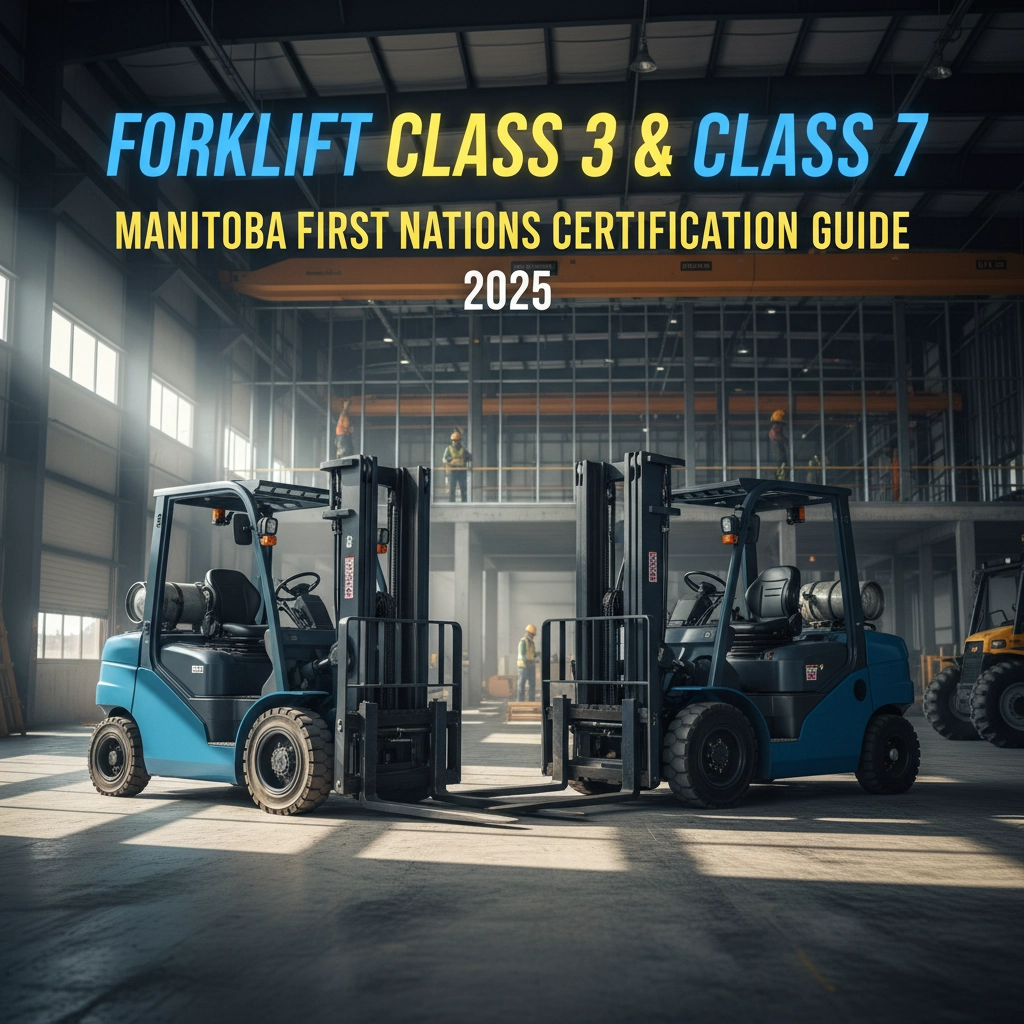
Manitoba follows standardized forklift classifications that align with national safety standards, helping communities deliver training that is recognized across Canada. While there are seven main classes of forklifts, Class 3 and Class 7 remain two of the most practical options for communities looking to improve local employment readiness.
The distinction between these classes is not just technical. It affects where community members can work, what projects they can support, and how bands and tribal councils can plan training around local priorities. For many leaders, community operator training is most effective when it connects directly to infrastructure needs, community services, and long-term employment outcomes.

Class 3 Forklifts: The Warehouse Workhorses
Class 3 forklifts are electric motor hand trucks, hand/rider pallet trucks, and low lift trucks. These compact, efficient machines form the backbone of warehouse operations across Manitoba, from Winnipeg's logistics hubs to smaller distribution centers throughout the province.
Key Characteristics:
- Battery-powered for indoor use
- Designed for ground-level pallet transport
- Compact size for navigating tight warehouse spaces
- Fast, repetitive task capability
Common Applications:
- Retail distribution centers
- Food and beverage warehouses
- Manufacturing facilities
- Airport cargo operations
Training Focus Areas:
Class 3 certification emphasizes pedestrian safety awareness, as these machines operate in high-traffic environments. Operators learn proper load balancing techniques, battery charging safety protocols, and daily equipment inspection procedures. The training also covers proper rider pallet entry and exit techniques, which are critical for preventing workplace injuries.
One important consideration: despite their smaller size, Class 3 forklifts are responsible for a significant portion of workplace forklift injuries, particularly involving pedestrians and co-workers. This makes thorough training essential for community safety and liability protection.
Class 7 Forklifts: Rough Terrain Specialists
Class 7 forklifts are rough terrain machines designed for outdoor operations and challenging environments. These powerful machines open doors to employment in Manitoba's resource sectors, construction projects, and industrial sites where standard warehouse equipment simply can't operate.

Key Characteristics:
- All-terrain capability for outdoor use
- Extended boom reach for extreme heights
- Pneumatic tires for uneven surfaces
- Diesel or propane power for demanding applications
Common Applications:
- Construction sites and infrastructure projects
- Lumber yards and forestry operations
- Mining and resource extraction sites
- Agricultural operations
Training Focus Areas:
Class 7 certification covers complex operational skills including terrain assessment, load chart interpretation, and boom control techniques. Operators learn to handle uneven, sloped, or slippery surfaces without tipping equipment. The training emphasizes stabilizer setup, lift planning, and understanding how load capacity decreases with boom extension.
This certification requires more comprehensive training due to the complexity and higher risk associated with rough terrain operations, but it also opens doors to higher-paying positions in specialized industries.
First Nations training Manitoba: Certification Requirements
Manitoba's forklift certification requirements apply across the province, including First Nations communities. The legal framework includes Manitoba Regulation 22.29, the Code of Practice for the Safe Operation of Powered Lift Trucks, and updates referenced in the 2026 M.R. 26/2026 amendments.
Legal Requirements:
Employers cannot permit workers to operate powered lift trucks without proper certification. To receive certification, workers must:
- Complete instruction, training, and testing according to approved code of practice
- Demonstrate familiarity with specific equipment operating procedures
- Show competency in equipment operation
- Pass both written and practical assessments
Employer Responsibilities:
Employers must establish evaluation systems to support ongoing competency and maintain training records. This applies to band councils, tribal councils, community-owned operations, and other employers working with community members.
Manitoba's M.R. 26/2026 was registered on March 20, 2026 and comes into force on April 1, 2027. For larger community infrastructure projects, this matters because it removes the safety exemption for commercial, industrial, or institutional construction and renovation sites with more than 25 workers on site at any one time, or buildings over 600 m2 or more than three storeys. It also adds prime contractor duties under section 4.7. For First Nations planning larger housing, public works, or facility projects, this is an upcoming requirement that makes strong training systems even more important. In practice, Indigenous workforce training helps leadership teams prepare members for safer participation in projects that matter to the community.

Training Components and Standards
Manitoba forklift operator training now points to CSA B335:25, released in May 2025, as the recognized baseline for lift truck operator training. Training includes both classroom instruction and hands-on practical experience. The updated standard also recognizes online learning and virtual reality simulation as delivery and evaluation methods, places stronger expectations on risk assessment, and expects trainers to retrain every three years.
Core Training Elements:
- Forklift hazards and safety procedures
- Provincial standards, regulations, and operator responsibilities
- Equipment design and classification systems
- Stability principles and load management
- Pre-operational inspection procedures
- Safe operating procedures for specific equipment types
- Fuel source safety (battery, propane, diesel)
- Emergency procedures and incident response
- Site-specific hazard review and stronger risk assessment planning
Assessment Process:
Certification requires passing both written examinations and practical skill assessments. Participants complete structured driving courses that test their abilities to operate equipment safely and efficiently in real-world scenarios. Depending on the program format, parts of instruction and evaluation may also be supported through online and simulation-based methods before in-person practical testing.
Practical Considerations for First Nations Communities
When planning forklift training programs for your community, consider these practical factors:
Geographic Considerations:
Manitoba's geography means each community faces different training and employment realities. Some communities may need Class 3 skills for local storage, supply, or logistics work. Others may benefit more from Class 7 training tied to outdoor projects, site preparation, or community infrastructure work.
Partnership Opportunities:
Training can support stronger partnerships with project owners, contractors, and public agencies. When communities have certified operators ready, bands and tribal councils are in a better position to advocate for local hiring and improve employment outcomes for members.
September 2026 reporting in the Winnipeg Free Press also points to a bigger opportunity. Manitoba is pushing to grow mineral production significantly, while First Nations training capacity is still lagging behind demand. Industry groups are now developing micro-credentials for on-reserve delivery to help close that gap. That matters because certified equipment operators are in high demand right now, especially workers with strong Class 7 rough terrain skills that fit resource development and construction work.
Economic Development Alignment:
Forklift certification can support broader community plans. If your nation is advancing housing, roads, utilities, or other development priorities, trained operators can contribute to that work while building experience that carries into future opportunities. This is one reason Indigenous workforce training continues to be an important part of community economic development.

Training Delivery Options:
Look for providers that can deliver community operator training on-site. This reduces travel barriers, makes scheduling easier, and allows more members to take part in training close to home.
Certification Validity and Ongoing Requirements
Forklift certification in Manitoba is valid for three years from the date of issuance. This means planning for refresher training as part of your workforce development strategy.
Refresher training updates operators on current legislative changes and industry standards. It's also an opportunity to address any skill gaps or safety concerns that may have developed since initial certification.
This planning also supports due diligence. On March 27, 2026, Manitoba Natural Resources and Indigenous Futures was convicted after a 2022 fatal ATV rollover, with three Workplace Safety and Health Regulation contraventions and a $100,000 fine. The case is a clear reminder that operator instruction, safe work procedures, and documented supervision are enforced expectations for every employer.
Getting Started with Certification Programs
For First Nations communities ready to invest in forklift certification, the process begins with identifying local needs, upcoming projects, and employment goals. It helps to assess how many members are interested in equipment work and whether Class 3, Class 7, or both fit the community's priorities.
When selecting a training provider, look for experience working with First Nations communities and delivering training in ways that respect local schedules, needs, and goals. Providers that deliver on-site training can remove barriers and help more members participate. You can learn more about available programs through Onsite Training Services and its forklift training guide.
Quality training should prepare people for more than a test. It should help them build confidence, work safely, and contribute to community projects and future employment opportunities.
The investment in forklift certification supports stronger employment outcomes for members and stronger planning for bands and tribal councils. With the right approach, First Nations training Manitoba can become part of a broader strategy for skills development, infrastructure readiness, and local economic growth.
Contact Workforce Ready to plan equipment operator training for your community.
More guides
Need your operators certified?
We bring the training to your site, on your own equipment. Tell us the machines and how many operators and we reply the same business day.