Powered Mobile Equipment Refresher Training: When to Recertify Your Operators
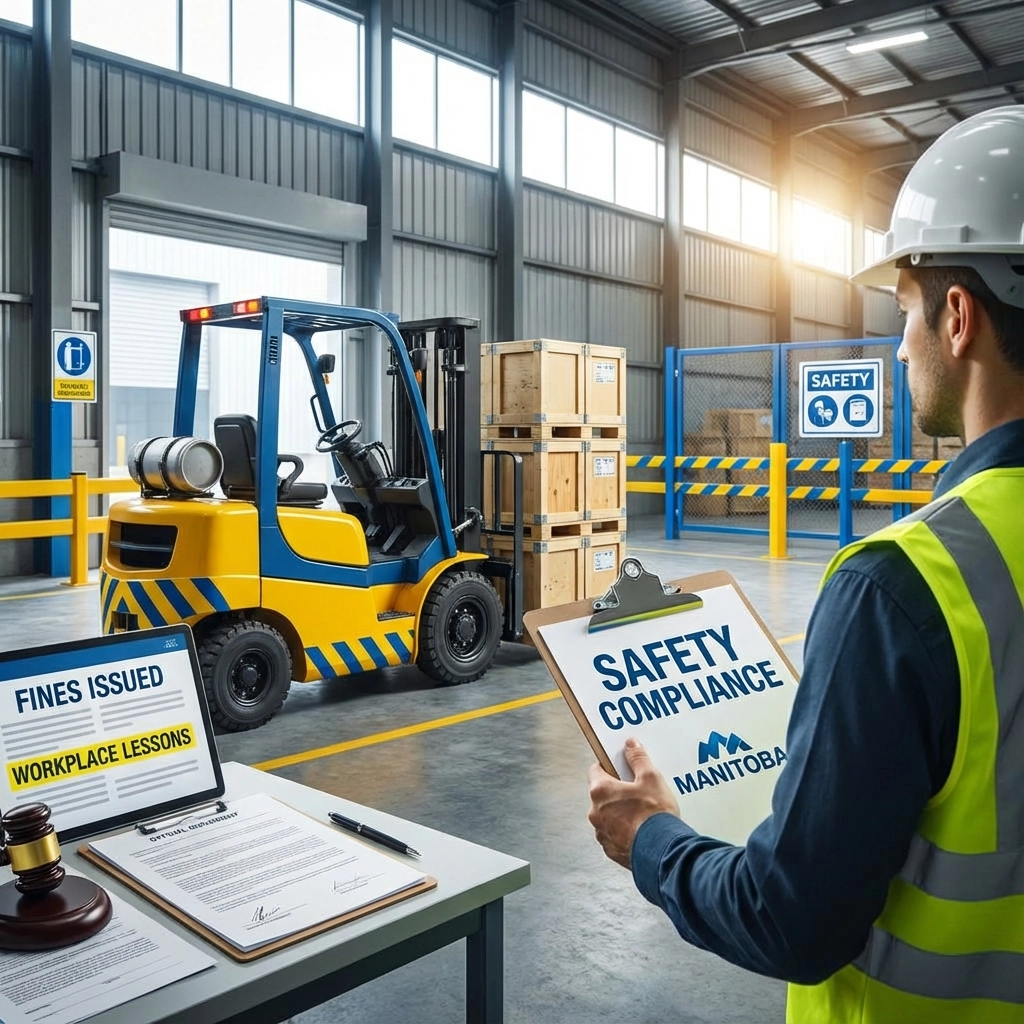
Real Manitoba forklift fines show what inspectors look for: training records, CSA B335:25 instruction, practical evaluation and daily inspection logs.
Last updated on October 6, 2026
This article is a new guide.
Powered Mobile Equipment Refresher Training matters because certification is not a one-time task. Employers need a clear system to keep operators current, reduce risk, and show due diligence if records are inspected. For safety officers, operations managers, foremen, and warehouse supervisors, the goal is simple: make sure every operator is competent, authorized, and re-evaluated on time.
In most workplaces, operator certifications on powered mobile equipment generally run on a three-year cycle. That baseline helps employers plan ahead, but it is not the only rule that matters. Some events require retraining before the three years are up, and employers need to be ready to act quickly when those events happen.
Powered Mobile Equipment Refresher Training Starts With the Three-Year Cycle
For many employers, the starting point is the standard three-year certification cycle. This gives companies a practical schedule for reviewing knowledge, confirming safe habits, and updating records across the workforce.
CSA B335:25, released in May 2025 and replacing CSA B335-15, reinforces this approach. It also sets the expectation that trainers retrain every three years. That matters for employers who rely on in-house trainers or supervisors to help support operator programs, which is why many use structured forklift recertification training.
What the three-year cycle means in practice
A three-year cycle should not be treated as a simple card renewal. Recertification should include:
- Updated theory on safe operation
- Review of current workplace hazards
- Practical evaluation on the employer's own equipment
- Updated records showing the operator remains competent
Even where online learning or VR simulation supports the instruction, practical evaluation on the machine the operator actually uses is still required at recertification. That means an operator who uses a warehouse forklift, skid steer, or other powered mobile equipment still needs hands-on review in real workplace conditions.
If your team needs support with lift truck recertification, many employers schedule forklift training Winnipeg onsite to reduce disruption and complete practical evaluations on the equipment already in service.
Powered Mobile Equipment Refresher Training May Be Needed Before Three Years
The three-year cycle is the baseline, not a free pass to wait. Employers may need to retrain an operator earlier when there is reason to question continued competency or when work conditions change.
Incident or Injury
If an operator is involved in an incident or injury, refresher training should happen as part of the corrective action.
Example: A forklift operator strikes a racking upright while turning with a load. Even if damage is minor, the employer should review safe turning, speed, load handling, and site conditions before the operator returns to normal duties.
Near Miss
A near miss can show the same weakness as an actual incident. It should not be ignored.
Example: An operator backs out of an aisle and narrowly misses a pedestrian. No one is hurt, but the event shows a need to review visibility, horn use, travel routes, and pedestrian controls.
Observed Unsafe Operation
When a supervisor sees unsafe habits, retraining may be needed right away.
Example: A foreman notices an operator travelling with elevated forks or failing to use a seatbelt. Even without an incident, that unsafe behaviour is enough to trigger refresher training and re-evaluation.
Change in Equipment or Attachments
A different machine or new attachment can change the job enough that past training is not enough.
Example: An operator who has been using a standard forklift is now assigned a unit with a clamp attachment. Load handling, visibility, and capacity can all change, so the operator needs instruction and practical review before regular use.
Change in Site or Work Conditions
A new environment can introduce new hazards.
Example: An operator who normally works in a wide warehouse is moved to a tighter shipping area with more pedestrians, trailers, and blind corners. The employer should review traffic flow, local rules, and safe operating practices for that site.
Extended Time Away From the Machine
Skills can fade if an operator has not used the equipment for a long period.
Example: A worker returns after a long leave or seasonal layoff and has not operated the machine for months. A brief refresher and practical check can confirm they are still ready to work safely.
Supervisor Performance Concerns
Supervisors often see early signs that an operator needs help.
Example: A warehouse supervisor notices repeated hard braking, poor load placement, or trouble judging clearances. Even if there has been no incident, these concerns should lead to review, coaching, and re-evaluation.
What Refresher Training Should Include
A good refresher program, such as our forklift training in Winnipeg, should be practical, focused, and easy to document. It should not be limited to a short talk in the lunchroom.
Updated theory
Theory should cover:
- Current safe work procedures
- Equipment limits and operating rules
- Changes to standards, policies, or site procedures
- Lessons learned from incidents or near misses
Practical competency re-evaluation
The most important step is checking real performance on the machine the operator actually uses. That means:
- Pre-use inspection
- Safe startup and shutdown
- Travel, turning, and stopping
- Load handling
- Use of attachments where applicable
- Parking and securing the equipment
Site hazard review
Operators should also review the hazards of the actual workplace, such as:
- Pedestrian traffic
- Slopes, ramps, and dock edges
- Tight aisles or congested yards
- Surface conditions
- Lighting and visibility issues
Documentation
Training is not complete without records. Employers should keep clear documentation showing:
- What training was delivered
- When it happened
- What equipment was covered
- Who evaluated the operator
- Whether the operator passed the practical assessment
Manitoba Requirements Employers Need to Remember
In Manitoba, employers need to think beyond the certificate itself. Under the Workplace Safety and Health Act and Workplace Safety and Health Regulation 217/2006, Part 22 covers powered mobile equipment.
In practical terms, employers must be able to prove operators are:
- Competent
- Authorized
- Trained for the equipment they use
- Evaluated for safe operation in workplace conditions
Records must also be available for inspection. If an employer cannot produce training records, evaluation records, or authorization details, that creates a serious compliance problem even if the operator has years of experience.
How to Track Expiry Dates Across a Workforce
For companies with multiple operators, expiry tracking should be built into normal safety administration. A simple training register or spreadsheet can work well if it is kept current.
What to include in the register
Track at least:
- Operator name
- Department or site
- Equipment type
- Certification date
- Expiry date
- Trigger events that caused earlier retraining
- Date of most recent practical evaluation
How to stay ahead of expiry
Use a simple process:
- Set reminders 90 days ahead of expiry
- Review the list monthly
- Bundle refresher training by site or department
- Use onsite delivery to reduce downtime
- Confirm evaluators and equipment availability before the training date
This approach makes scheduling easier and helps avoid last-minute lapses.
What to do if certification lapses
If an operator's certification expires, remove that operator from the equipment until retrained and re-evaluated. Do not let the operator continue just because training is already booked. A lapse should trigger immediate action to protect workers and reduce employer exposure.
Employer Checklist for a Recertification Program
Use this short checklist to keep your recertification program organized:
- Keep a current register of all powered mobile equipment operators
- Record certification and expiry dates for each equipment type
- Set 90-day reminders before expiry
- Watch for trigger events that require earlier retraining
- Review theory during refresher training
- Re-evaluate practical competency on the employer's equipment
- Review site hazards and local procedures
- Keep records ready for inspection
- Remove expired operators from equipment until retrained
- Schedule training by site or department to reduce downtime
A strong recertification program is not just about meeting a date on the calendar. It helps employers control risk, support supervisors, and keep equipment operators safe and competent in real work conditions.
Contact Onsite Equipment Training to book your certification program.
More guides

Need your operators certified?
We bring the training to your site, on your own equipment. Tell us the machines and how many operators and we reply the same business day.