How to Drive a Skid Steer Safely: The Complete 2026 Operator’s Guide
A 2026 guide to driving a skid steer safely: pre-use inspection, controls, load handling, slopes, blind spots and Manitoba fall and winter operating tips.
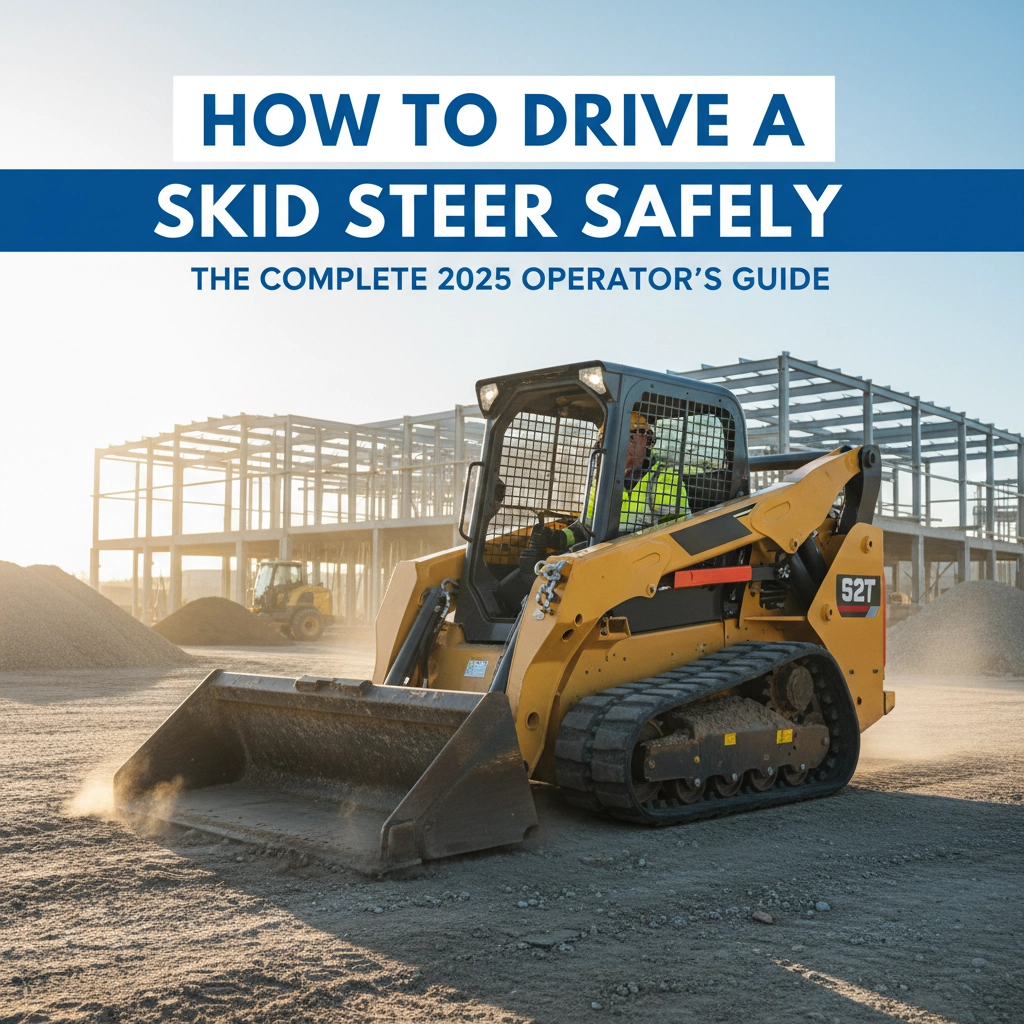
For employment and training departments across Manitoba's First Nations communities, skid steer training represents more than just equipment certification: it's a pathway to sustainable employment and economic development. With construction, infrastructure, and resource projects expanding throughout the province, properly trained skid steer operators are in high demand.
Last updated on October 1, 2026
What's new in this update
- Updated Manitoba compliance guidance with current references to CSA B335:25 and Manitoba Regulation 217/2006 Part 22
- Added upcoming April 1, 2027 construction rule changes that matter for larger community projects
- Added a Manitoba fall and winter operating section for freezing ground, ice, snow, and cold-weather inspections
- Included a current 2026 enforcement example showing why documented competence matters
- Added a short note on rising operator demand tied to Manitoba's mining and critical minerals expansion
However, skid steers are among the most hazardous pieces of equipment on any worksite. These compact, powerful machines account for numerous workplace injuries annually, many of which are entirely preventable through proper training and safety protocols. This comprehensive guide will help your training programs establish the foundation for safe, competent operators who can contribute meaningfully to your community's workforce development goals.
Understanding the Equipment: What Makes Skid Steers Unique
Skid steers differ fundamentally from other heavy equipment. Unlike traditional loaders or excavators, these machines steer by varying the speed of tracks or wheels on either side: there's no steering wheel. This unique steering mechanism, combined with their compact size and high center of gravity, creates specific safety challenges that operators must master.
The machine's versatility comes from its quick-attach system, allowing operators to switch between buckets, forks, augers, and dozens of other attachments. While this flexibility makes skid steers invaluable on job sites, it also means operators must understand the safety implications of different attachments and their impact on machine stability.
Pre-Operation Safety: Building Safe Habits from Day One
Certification and Training Requirements
Before anyone in your community operates a skid steer, they must complete proper certification training. In Manitoba, this typically involves both classroom instruction and hands-on evaluation. The investment in quality training pays dividends: certified operators experience significantly fewer accidents, work more efficiently, and command higher wages in the marketplace.
Your training program should emphasize that skid steer operation isn't intuitive. Even experienced equipment operators need specific training on these machines. The unique control systems, stability characteristics, and safety features require dedicated instruction time.
For Manitoba programs, it is important to align community training with current safety standards and provincial rules. CSA B335:25, released in May 2025, is now a recognized baseline for lift truck operator training and helps reinforce the value of formal instruction, testing, and documentation. For skid steers and other powered mobile equipment, Manitoba Regulation 217/2006 Part 22 remains the main provincial reference for safe operation, worker competency, and employer responsibilities.
There is also an upcoming rule change that matters for larger community builds. Effective April 1, 2027, M.R. 26/2026 removes the construction site safety exemption for commercial, industrial or institutional construction and renovation sites with more than 25 workers on site at any one time, or buildings over 600 m2 or more than three storeys. It also adds prime contractor duties. For First Nations crews involved in larger housing, infrastructure, or community facility projects, that means documented competence and clear site safety roles will matter even more.

Daily Equipment Inspection
Establish a culture where every operator performs a thorough pre-operation inspection. This isn't just a safety requirement: it's a professional standard that distinguishes trained operators from casual users. The inspection should include:
- Visual inspection of all safety systems: Roll-over protective structure (ROPS), falling object protective structure (FOPS), operator restraint systems, and door/screen integrity
- Hydraulic system check: Fluid levels, visible leaks, and attachment connections
- Tire or track condition: Proper inflation, tread wear, and damage assessment
- Engine systems: Oil level, coolant, and unusual noises during startup
- Control function test: All joysticks, switches, and hydraulic functions operating smoothly
Never allow operators to skip this inspection, even when time is short. Equipment failures during operation put lives at risk and can halt entire projects.
Safe Entry and Startup Procedures
The Three-Point Contact Rule
Teach every operator the three-point contact method for entering and exiting the machine. This means maintaining contact with at least three points (two hands and one foot, or one hand and two feet) at all times. Face the machine while climbing up, use designated handholds and steps only, and never rush this process.
Slips and falls during entry/exit account for a significant percentage of skid steer injuries. Clean all steps and handholds of mud, ice, or debris before use: especially critical during Manitoba's harsh winter conditions.
Proper Seating and Restraint Systems
Once in the operator's seat, proper setup is crucial:
- Adjust the seat to reach all controls comfortably without stretching
- Secure the seat belt before lowering the safety bar
- Lower and lock the safety bar completely: it should feel solid and secure
- Test that all controls are within easy reach without leaning or straining
The machine's safety systems prevent startup until both the seat belt and safety bar are properly secured. Never bypass or disable these systems.
Mastering the Controls: Smooth Operation Prevents Accidents
Understanding Control Patterns
Skid steers use two primary control patterns: ISO controls (found on most newer machines) and H-pattern controls (common on older models). Your training program must identify which pattern each machine uses, as mixing them up can cause dangerous operator errors.
For ISO controls:
- Push left joystick forward to move forward
- Pull left joystick back to reverse
- Push right joystick forward to tilt bucket down
- Pull right joystick back to raise boom
Practice these movements until they become second nature. Jerky or incorrect control inputs cause the machine to lurch unexpectedly, potentially causing tip-overs or loss of control.

Smooth Movement Principles
Emphasize smooth, deliberate joystick movements in all training scenarios. Sudden control inputs cause several problems:
- Machine instability and potential tip-over
- Excessive wear on hydraulic components
- Operator fatigue from fighting machine responses
- Reduced precision in material handling
Professional operators distinguish themselves through smooth, controlled movements that make the machine appear effortless to operate.
Load Handling: The Foundation of Safe Operation
Understanding Rated Operating Capacity
Every skid steer has a Rated Operating Capacity (ROC): the maximum weight it can safely lift. However, this rating applies only under ideal conditions: level ground, load close to the machine, and standard bucket attachment. Real-world conditions often reduce safe capacity significantly.
Teach operators to:
- Know their specific machine's ROC
- Understand how attachments affect capacity
- Recognize that uneven ground reduces safe lifting capacity
- Account for material density when loading
Safe Carrying Practices
The cardinal rule of load carrying: keep loads as low as possible while still clearing ground obstacles. Carrying loads high dramatically increases tip-over risk. Even experienced operators sometimes ignore this rule under time pressure: reinforce it constantly.
When traveling with loads:
- Keep the load close to ground level
- Travel in forward direction whenever possible
- Avoid sudden turns or stops
- Reduce speed on uneven terrain
- Lower the load completely before turning around
Terrain Awareness: Preventing the Most Common Accidents
Slope and Grade Management
Slopes present the highest risk for skid steer tip-overs. Establish clear guidelines for your operators:
- Never operate across slopes: always travel straight up or down
- Avoid loading or unloading on any slope
- Keep loads on the uphill side when traveling on grades
- Walk questionable terrain before operating
- Establish maximum slope limits for your operation
Many communities operate in varied terrain conditions. Develop site-specific safety protocols that account for local geography and seasonal changes.

Surface Conditions
Manitoba's climate creates challenging surface conditions throughout the year. Train operators to recognize and adapt to:
- Frozen ground: Reduced traction and unpredictable stability
- Mud and soft soil: Increased sinking risk and reduced maneuverability
- Snow and ice: Severely compromised traction requiring reduced speeds
- Wet conditions: Slippery surfaces affecting both machine and foot traffic
Visibility and Blind Spot Management
Skid steers have significant visibility limitations due to their compact design. The operator sits low, and the boom/bucket assembly blocks forward view when raised. Establish protocols for:
Working Around Personnel
- Maintain constant communication with ground personnel
- Use spotters when working in congested areas
- Establish exclusion zones where personnel cannot work
- Never allow riders on the machine or attachments
Backing Up Safely
- Use mirrors and backup alarms where available
- Have a spotter guide backing maneuvers
- Drive forward whenever possible
- Clear the area behind before beginning reverse movement
Fall and Winter Operating in Manitoba
Manitoba operators need extra preparation in fall and winter. Freezing and thawing ground can change stability from one part of a site to another. A surface that feels firm in the morning may soften later in the day, especially around shoulders, trenches, fill areas, and recently disturbed ground.
Ice creates another level of risk. If a skid steer will be used on icy surfaces, the crew should complete a written hazard assessment before work begins. That assessment should identify travel routes, slope concerns, stopping distance, and the exclusion zones needed to keep people clear if the machine slides or the load shifts.
Snow clearing also needs planning, especially near pedestrians, parked vehicles, homes, and community buildings. Operators should know:
- Where snow will be stacked
- How traffic and foot travel will be separated
- When a spotter is needed
- How blind corners and building entrances will be protected
Cold weather can also slow hydraulic response. Controls may feel less responsive until the machine warms up, so operators need to allow proper warm-up time and avoid sudden movements early in the shift.
As daylight shortens, pre-shift inspections become even more important. Make sure each inspection checks:
- ROPS and FOPS integrity
- Seat belts and other restraints
- Work lights, warning lights, and backup alarms
- Windows, screens, and mirrors for visibility
- Any ice, snow, or mud buildup that could affect safe entry or safe operation
Common Hazards and Prevention Strategies
Tip-Over Prevention
Tip-overs cause the majority of serious skid steer accidents. Beyond the load and terrain management already discussed, prevent tip-overs by:
- Never using the bucket to push against immovable objects
- Avoiding sudden direction changes with raised loads
- Understanding how different attachments affect stability
- Recognizing operator fatigue as a contributing factor
Struck-By Incidents
- Maintain awareness of all personnel locations
- Never operate with the cab door open
- Secure loose clothing and PPE
- Use proper lockout procedures during maintenance
Attachment-Related Hazards
- Verify attachment security before operation
- Understand hydraulic pressure release procedures
- Never work under raised attachments
- Match attachment capacity to machine specifications
Why Documented Competence Matters
A current Manitoba enforcement case shows why training records and proven competence cannot be treated as paperwork only. On March 27, 2026, Manitoba Natural Resources and Indigenous Futures was convicted after a 2022 fatal ATV rollover. The case involved three Workplace Safety and Health Regulation contraventions and a $100,000 fine. While an ATV is not a skid steer, the lesson is the same for community equipment programs: operators need proper instruction, safe work procedures, and documented competence that can stand up to scrutiny after an incident.
Building a Successful Training Program
For First Nations communities developing training programs, consider these key elements:
Local Instructors and Cultural Integration
Develop local training capacity whenever possible. Community members who understand both the technical requirements and local work culture make the most effective instructors.
Progressive Skill Development
Structure training to build skills progressively: from basic machine familiarization through advanced techniques like trenching or material placement. This approach develops confident, competent operators rather than just certified ones.
Real-World Applications
Connect training directly to employment opportunities in your region. Partner with local contractors, municipalities, and development projects to provide context for why these skills matter.
As of September 2026, Manitoba's mining and critical minerals expansion is also increasing demand for certified operators. Community training capacity is still catching up in many areas, which means members who already hold current certification are well positioned for upcoming opportunities.
Ongoing Safety Culture
Certification is just the beginning. Maintain safety awareness through regular refresher training, safety meetings, and peer mentoring programs.
The economic benefits of skid steer training extend far beyond individual certification. Communities with trained, safety-conscious operators attract more development projects, reduce insurance costs, and build reputations for quality workmanship. Every operator you train safely becomes an ambassador for your community's commitment to excellence and safety.
By following these comprehensive safety protocols and emphasizing their importance in your training programs, you're not just preventing accidents: you're building the foundation for sustainable economic development and workforce growth that will benefit your community for generations to come.
Contact Workforce Ready to plan equipment operator training for your community.
More guides
Need your operators certified?
We bring the training to your site, on your own equipment. Tell us the machines and how many operators and we reply the same business day.