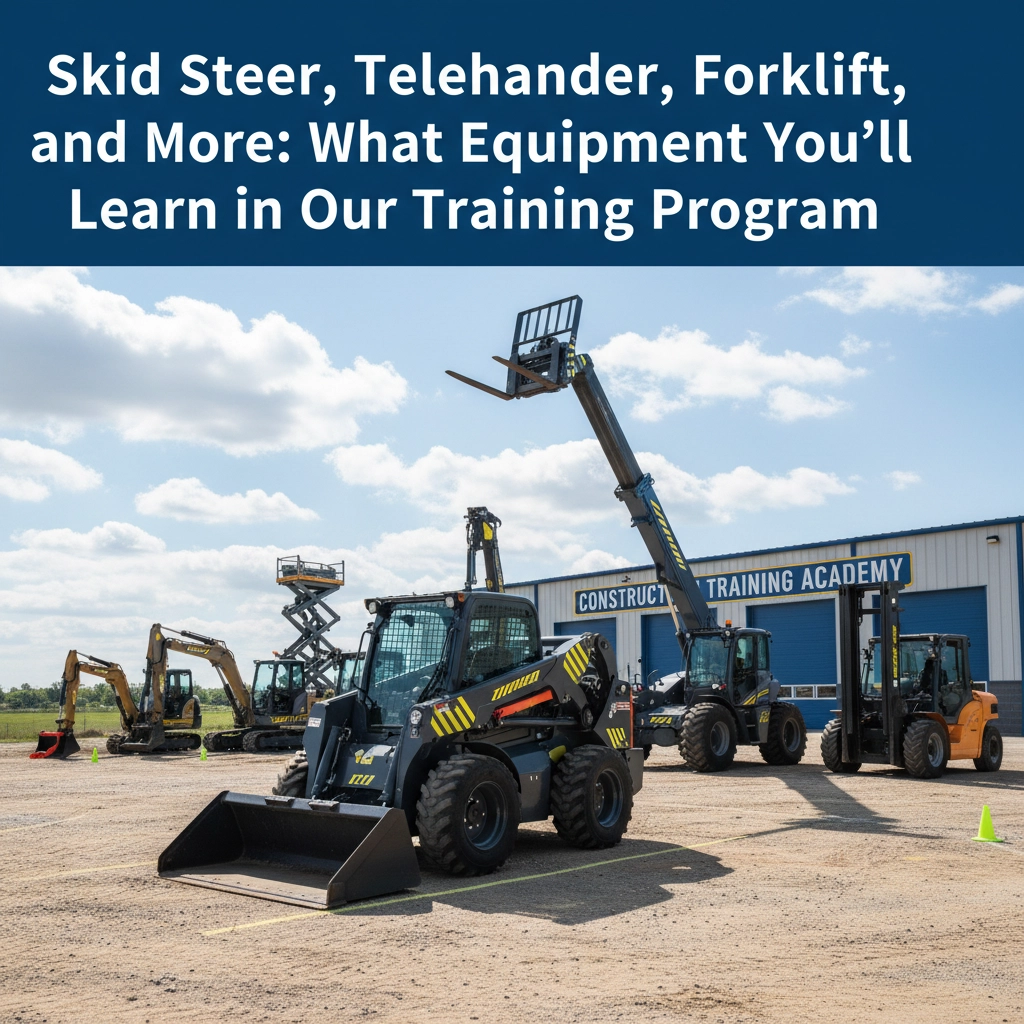
Skid Steer, Telehandler, Forklift, and More: What Equipment You’ll Learn in Our Training Program
See the equipment covered in our training program: skid steers, telehandlers, warehouse and rough terrain forklifts, plus safety and inspection skills.
Last updated on October 1, 2026
What's new in this update:
- Added current CSA B335:25 information for forklift and telehandler training, including online and virtual reality instruction options, three-year trainer retraining expectations, and required hands-on practical evaluation on the actual equipment
- Added Manitoba's M.R. 26/2026 compliance timeline and prime contractor context for larger housing, public works, and infrastructure projects
- Replaced the OSHA reference with Manitoba Workplace Safety and Health Regulation Part 22 and CSA-based guidance
- Added September 2026 Manitoba mining and critical minerals demand context
- Added a March 27, 2026 Manitoba enforcement example related to an ATV rollover fatality
When First Nations employment counsellors ask us what equipment their clients will actually learn to operate, we don't give them a vague answer. We show them exactly what machines they'll master, how much hands-on time they'll get, and why multi-equipment certification opens more doors than single-machine training.
Here's the complete breakdown of what participants gain in our comprehensive training program.
Skid Steer Loaders: The Swiss Army Knife of Construction
Skid steers are compact, versatile machines that employers love because one operator can handle multiple job sites. In our training program, participants spend extensive time learning to operate these powerful units safely and efficiently.
What You'll Master:
- Pre-operational safety inspections and daily maintenance checks
- Attachment changes for different applications (buckets, forks, augers, brush cutters)
- Precise maneuvering in tight spaces and around obstacles
- Load capacity calculations and stability principles
- Proper operating techniques for digging, lifting, and material handling
Real-World Applications:
Skid steer operators work in construction, landscaping, snow removal, farming, and municipal services. These machines excel at site cleanup, material transport, excavation prep work, and seasonal maintenance. For First Nations communities, skid steer certification opens opportunities in infrastructure projects, housing development, and community maintenance roles.

Hands-On Training Hours: Participants get a minimum of 12 hours of direct operating time on different skid steer models, ensuring they're comfortable with various control systems and attachment types.
Telehandlers: Reach Higher, Lift More
Telehandlers (also called telescopic handlers or zoom booms) combine the lifting power of a forklift with extended reach capabilities. These machines are increasingly common on construction sites, making telehandler certification valuable for job seekers.
Training Focus Areas:
- Load chart interpretation and capacity calculations at different boom extensions
- Stabilizer deployment and ground conditions assessment
- Precise load placement at height and distance
- Attachment versatility (forks, buckets, lifting jibs, work platforms)
- Communication protocols with ground personnel and crane operators
Why Employers Value Telehandler Operators:
These machines replace multiple pieces of equipment on many job sites. One certified operator can handle material placement that would otherwise require a forklift, crane, and additional labor. This efficiency makes telehandler operators highly sought after in construction, industrial maintenance, and infrastructure projects.
Because telehandlers are part of the lift truck family, training also needs to reflect current CSA requirements. CSA B335:25 replaced CSA B335-15 in May 2025 and is now the recognized baseline for lift truck operator training, including rough terrain models. That matters for telehandler instruction because the standard now recognizes online learning and virtual reality simulation for instruction and evaluation, expects trainers to retrain every three years, and still requires hands-on practical evaluation on the actual equipment.
Career Opportunities:
Telehandler operators find work in commercial construction, pipeline projects, utility maintenance, warehouse operations, and agricultural facilities. Starting wages typically range from $22-28 per hour, with experienced operators earning $30+ hourly.
Forklift Certification: Industrial Foundation Skills
Our forklift training program covers both indoor warehouse forklifts and rough terrain models used in outdoor construction applications. This dual certification approach gives participants flexibility across different work environments.
Comprehensive Curriculum Includes:
- Manitoba Workplace Safety and Health Regulation Part 22 for powered mobile equipment and the applicable CSA standard for the machine type
- Pre-shift inspection procedures and documentation
- Load handling techniques and center of gravity principles
- Battery maintenance for electric units and fuel systems for propane models
- Narrow aisle navigation and dock loading procedures
- Hazard recognition and incident prevention strategies

Rough Terrain Forklift Specialization:
Many training programs only cover warehouse forklifts, but we include rough terrain forklift certification because these machines are common in construction and industrial sites where First Nations workers often find employment.
Forklift training also needs to reflect the current standard. CSA B335:25 replaced CSA B335-15 in May 2025 and is now the recognized baseline for lift truck operator training, including rough terrain models. It recognizes online and virtual reality simulation for instruction and evaluation, expects trainers to retrain every three years, and still requires a hands-on practical evaluation on the actual equipment. In Manitoba, OSHA is not the governing framework. The right compliance context is Manitoba Workplace Safety and Health Regulation Part 22 for powered mobile equipment together with the applicable CSA standard for the machine type.
Employment Outcomes:
Forklift certification is required for warehouse, manufacturing, construction supply, and logistics positions. It's often the fastest path to immediate employment, with many operators finding work within weeks of certification.
Excavators and Heavy Equipment Integration
While our primary focus is on the versatile trio of skid steers, telehandlers, and forklifts, we also provide exposure to larger excavation equipment when participants show aptitude and interest in advancing their skills.
Progressive Training Approach:
- Start with compact equipment operation fundamentals
- Build confidence through successful completion of basic certifications
- Introduce larger machinery concepts through observation and limited hands-on exposure
- Create pathways for advanced training in specialized heavy equipment
This progression model works particularly well for First Nations participants who may not have prior industrial equipment experience but demonstrate strong mechanical aptitude.
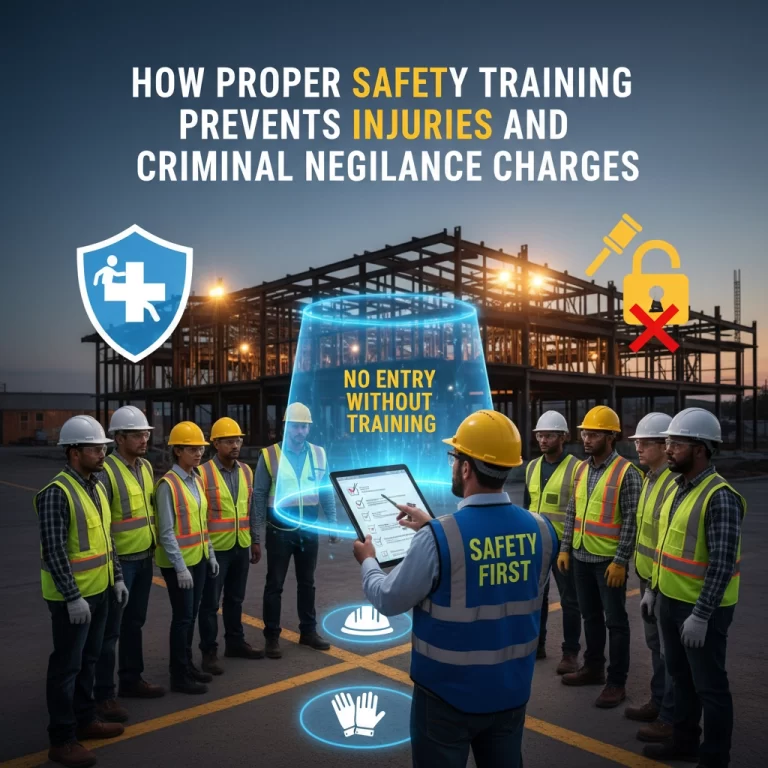
Safety Training: Non-Negotiable Foundation
Every piece of equipment training begins with comprehensive safety instruction. We don't rush participants into operator seats: they earn that privilege through demonstrated safety knowledge and practical application.
Safety Curriculum Components:
- Hazard identification and risk assessment for each machine type
- Personal protective equipment selection and proper use
- Ground conditions evaluation and stability factors
- Communication protocols and hand signals
- Emergency shutdown procedures and incident response
- Regulatory compliance documentation and record-keeping

Why Safety Training Matters for Employment:
Employers face serious liability when operators cause accidents. They actively seek training graduates who understand that safety isn't just about avoiding injuries: it's about protecting careers, companies, and coworkers. Our safety-first approach gives participants credibility with hiring managers.
Recent enforcement in Manitoba shows why this matters. On March 27, 2026, Manitoba Natural Resources and Indigenous Futures was convicted after a 2022 fatal ATV rollover, with three Workplace Safety and Health Regulation contraventions and a $100,000 fine. For communities building training cohorts, that is a clear reminder that equipment instruction must be documented, practical, and matched to the real hazards of the job.
Inspection and Maintenance Training
Understanding equipment maintenance isn't just about keeping machines running: it's about demonstrating responsibility and mechanical aptitude that employers value highly.
Daily Inspection Training:
- Systematic walk-around procedures for each equipment type
- Fluid level checks and identification of potential issues
- Wear point inspection and documentation requirements
- When to operate, when to report, and when to shut down
- Proper documentation and communication with maintenance teams
Basic Maintenance Skills:
- Greasing procedures and lubrication schedules
- Filter changes and routine service intervals
- Battery maintenance and charging procedures
- Tire pressure and track tension basics
- Cleaning and storage protocols
These skills differentiate our graduates from operators who only know how to drive the equipment. Employers recognize that maintenance-aware operators save money and reduce downtime.
Multi-Equipment Certification Advantages
Here's why we train participants on multiple machines instead of focusing on just one:
Immediate Employment Benefits:
- Qualify for more job postings and employment opportunities
- Demonstrate versatility and adaptability to employers
- Command higher starting wages due to broader skill set
- Reduce dependency on single-machine job availability
Long-Term Career Development:
- Build foundation for equipment operator apprenticeships
- Create pathways to heavy equipment operator careers
- Develop transferable skills that apply across industries
- Establish credibility for supervisory and training roles

Economic Impact for Communities:
When First Nations workers gain multi-equipment certification, communities benefit through increased employment rates, higher household incomes, and reduced reliance on outside contractors for infrastructure projects.
This advantage is even stronger right now. September 2026 Winnipeg Free Press reporting noted that Manitoba is pushing to grow mineral production while First Nations training capacity is still lagging. In that environment, multi-equipment certification gives community members a direct advantage because they can step into a wider range of project support, site preparation, materials handling, and infrastructure roles as demand grows.
Training Schedule and Structure
Our equipment training programs are designed around the realities of First Nations participants who may need to balance training with family responsibilities and community commitments.
Flexible Program Options:
- Two-week intensive programs for rapid employment preparation
- One-week focused certifications for specific equipment types
- Weekend and evening sessions for working participants
- Community-based training delivered on-reserve when group sizes permit
Daily Structure:
- Morning classroom sessions covering theory, safety, and regulations
- Afternoon hands-on operation with individual instruction and practice
- Documentation and evaluation components integrated throughout
- Real-world scenario practice using actual job site conditions
Getting Started: Next Steps for Employment Counsellors
If you're working with First Nations job seekers who could benefit from equipment operator certification, we make the referral process straightforward.
For communities planning larger housing, public works, and infrastructure projects, this is also the right time to plan for Manitoba's next compliance change. M.R. 26/2026 was registered on March 20, 2026 and comes into force on April 1, 2027. It removes the construction site safety exemption for commercial, industrial, or institutional construction and renovation sites with more than 25 workers on site at any one time or buildings over 600 m2 or more than three storeys, and it adds prime contractor duties under section 4.7. Communities building training cohorts for larger projects should plan now so local workers are ready before that timeline takes effect.
Program Enrollment Support:
- Detailed information packages for funding applications
- Direct communication with band employment coordinators
- Flexible scheduling to accommodate community needs
- Transportation assistance coordination when possible
Ready to discuss training options for your clients? Request a quote or contact us directly to explore how our multi-equipment certification programs can create immediate employment opportunities for First Nations job seekers.
The combination of skid steer, telehandler, and forklift certification provides participants with versatile skills that employers actively seek. It's not just training; it's a direct pathway to stable, well-paying employment in growing industries.
More guides
Need your operators certified?
We bring the training to your site, on your own equipment. Tell us the machines and how many operators and we reply the same business day.