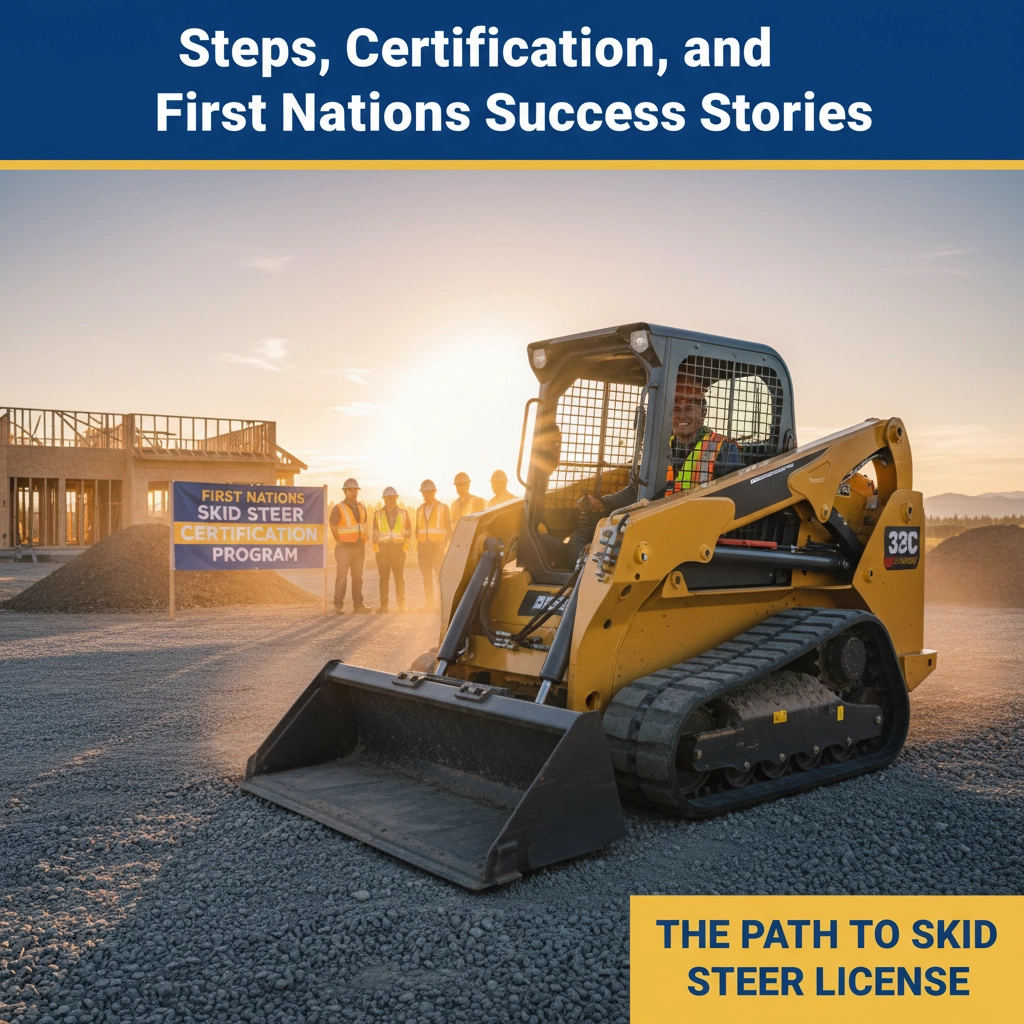
The Path to Skid Steer License: Steps, Certification, and First Nations Success Stories
There's no skid steer license in Manitoba, but there is certification. Steps to get certified, costs, funding options and First Nations success stories.
Last updated on October 1, 2026
What's new in this update
- Updated Manitoba legal and standards references for powered mobile equipment and lift truck training
- Added the 2026-2027 Manitoba regulatory timeline that communities should plan for now
- Included a recent Manitoba enforcement example to strengthen the due diligence section
- Added September 2026 mining and critical minerals labour market context
- Expanded the funding section with a current drinking water internship example
If you're managing employment and training programs for First Nations communities in Manitoba, you already know that heavy equipment operation offers some of the most reliable career pathways for your community members. Skid steer certification represents an excellent entry point into the construction and industrial sectors: with operators earning competitive wages and building transferable skills that open doors across multiple industries.
Understanding Skid Steer Licensing in Manitoba
In Manitoba, skid steer operation falls under provincial safety law, but there's no single "license" like a driver's license. Instead, operators need proper training certification that demonstrates competency in safe operation, pre-use inspections, and hazard recognition. Manitoba lift truck and powered mobile equipment requirements sit under The Workplace Safety and Health Act and Manitoba Regulation 217/2006, Part 22. Most employers require this certification before hiring, and properly documented training helps support due diligence.
The certification process involves both theoretical knowledge and hands-on practical assessment. Operators must understand equipment limitations, safety systems, maintenance requirements, and proper operating procedures. The current standard for lift truck operator training is CSA B335:25, released in May 2025, which replaced CSA B335-15. It recognizes online learning and virtual reality simulation for instruction and evaluation, and it expects trainers to retrain every three years. Even so, the hands-on practical evaluation still remains required. This isn't just paperwork: it's about ensuring your community members return home safely every day while building careers that support their families.

Step-by-Step Certification Process
Step 1: Meet Basic Requirements
Candidates must be at least 18 years old and have basic literacy skills to understand safety manuals and operational procedures. While formal secondary education isn't always required, most training providers recommend Grade 10 level reading comprehension to successfully complete the theoretical components.
Step 2: Choose Your Training Path
You have several options for getting your community members certified:
Onsite Community Training: This is often the most practical option for First Nations communities. Training companies like Onsite Training Services bring equipment and instructors directly to your community, eliminating travel barriers and allowing multiple participants to train together. This approach builds group confidence and allows for training in familiar surroundings.
Institutional Training: Technical colleges and training centers offer structured programs, but require travel and may not align with community schedules.
Industry-Specific Training: Some employers provide their own certification programs, but these are typically only valid within that specific company.
For communities preparing members for larger building or renovation projects, it is also important to plan ahead for Manitoba's next regulatory change. M.R. 26/2026 was registered on March 20, 2026 and comes into force on April 1, 2027. It removes the construction site safety exemption for commercial, industrial, or institutional construction and renovation sites with more than 25 workers on site at any one time, or for buildings over 600 m2 or more than three storeys. It also adds prime contractor duties under section 4.7. Communities training members for larger projects should plan for these expectations now, not later.
Step 3: Complete Theory Training
The theoretical component covers equipment types, safety systems, pre-operational inspections, load handling, stability principles, and hazard identification. Most programs require a minimum 70% score on the written test. Online theory components allow flexible scheduling around community commitments and can be completed at your own pace. Online delivery can help with access in remote areas, but it does not replace the practical assessment requirement.
Step 4: Hands-On Practical Assessment
The practical assessment involves demonstrating proper pre-use inspection procedures, safe startup and shutdown, basic operations including lifting, traveling, and material handling, hazard recognition, and emergency procedures. Experienced operators typically need 20-30 minutes for assessment, while new operators require 2-3 hours of hands-on training and evaluation. This step cannot be skipped, even when theory has been completed online or through simulation.

Benefits for First Nations Communities
Economic Impact
Certified skid steer operators in Manitoba typically earn $18-25 per hour starting wages, with experienced operators commanding $25-35+ per hour. These wages provide stable income that supports families and contributes to community economic development. Unlike seasonal work, heavy equipment operation offers year-round employment opportunities in construction, infrastructure development, maintenance, and resource extraction.
There is also strong market timing right now. September 2026 reporting from the Winnipeg Free Press noted that Manitoba is pushing to grow mineral production while First Nations training capacity still lags behind demand. As larger mining and critical minerals projects move ahead, communities with certified operators are better positioned to connect members to immediate work opportunities.
Skills Transferability
Skid steer certification provides foundational knowledge that transfers to other heavy equipment. Many operators use this as a stepping stone to excavator, bulldozer, or crane operation: each representing increased earning potential and career advancement opportunities.
Community Infrastructure Development
When your community members are certified operators, you can more effectively manage local infrastructure projects. Whether it's road maintenance, construction projects, or emergency response, having certified operators within the community reduces costs and improves project timelines.
Youth Engagement and Retention
Heavy equipment operation appeals to many young people who prefer hands-on work over traditional classroom settings. Certification programs can help keep youth engaged in skill development while providing clear pathways to well-paying careers that don't require leaving the community permanently.
Training Costs and Funding Options
Typical Training Costs
Standard skid steer certification ranges from $300-800 per person, depending on experience level and training format. Group training rates often provide significant savings: bringing costs down to $200-400 per participant when training 8-12 people simultaneously.
Available Funding
First Nations communities have access to several funding streams for skills training:
Indigenous Skills and Employment Training (ISET) Program: Provides funding for skills training that leads to employment. This federal program specifically supports training that addresses labour market demands.
Skills Link Program: Helps youth aged 15-30 develop basic skills for employment, including pre-employment training and work experience opportunities.
Canada Job Grant: Provides up to two-thirds of training costs when employers commit to ongoing employment.
Provincial Training Allowances: Manitoba offers various training supports for unemployed individuals seeking skills development.
As of September 2026, communities are also watching newer funded pathways that connect training directly to certification. One current example is a new 15-month Drinking Water Internship supported through ISET and delivered with First Peoples Development Inc., showing how funded operator-focused training can be structured to lead to recognized certification and stronger local capacity.

Success Stories from Manitoba First Nations
Northern Community Infrastructure Project
A northern Manitoba First Nation community trained 15 members in skid steer operation as part of a housing development initiative. Within six months, 12 of these operators were employed full-time: six within the community on ongoing projects and six with regional construction companies. The community saved over $40,000 in contractor costs by using their own certified operators for ongoing maintenance work.
Youth Employment Success
A central Manitoba community included skid steer training in their youth employment program. Eight participants completed certification, with seven finding immediate employment. Two participants used their certification to start a small excavation business serving surrounding communities, creating additional employment for family members.
Emergency Preparedness Enhancement
Following flood damage, a southeastern Manitoba community trained six operators specifically for emergency response capabilities. These certified operators proved invaluable during subsequent flood events, operating equipment for sandbagging, debris removal, and infrastructure repair. The community's improved emergency response capacity attracted provincial recognition and additional infrastructure funding.
Choosing the Right Training Partner
When selecting a training provider for your community, consider several key factors:
Experience with First Nations Communities: Look for providers who understand the unique challenges and opportunities within Indigenous communities. They should be familiar with funding programs and flexible with scheduling around community events and commitments.
Onsite Training Capability: The ability to bring training directly to your community eliminates travel barriers and allows for customized programs that address your specific needs.
Comprehensive Certification: Ensure the certification meets Manitoba legal requirements and is recognized by major employers in your region. Training should align with The Workplace Safety and Health Act, Manitoba Regulation 217/2006, Part 22, and current standards expectations, while still including practical evaluation.
Follow-up Support: Quality training providers offer ongoing support for job placement assistance and refresher training as needed.
Strong Safety Record and Due Diligence Focus: Your training partner should take documentation, supervision, and safe work procedures seriously. That matters in real-world enforcement. On March 27, 2026, Manitoba Natural Resources and Indigenous Futures was convicted after a 2022 fatal ATV rollover, with three contraventions under workplace safety rules and a $100,000 fine, later outlined in a Province of Manitoba news release. For communities building training programs, this is a clear reminder that certification must be backed by real safe work procedures, supervision, and documented competency.

Getting Started: Next Steps for Employment Departments
Assessment and Planning
Begin by surveying community interest and identifying potential funding sources. Determine how many community members would benefit from certification and whether you have current or planned projects that could utilize these skills.
Partner Selection
Research training providers with experience working with First Nations communities. Request references from other communities and ask about their success rates for job placement following certification.
Funding Applications
Apply for available funding programs well in advance of planned training dates. Most funding programs have specific application deadlines and requirements that need careful attention.
Community Engagement
Hold information sessions to explain the opportunities and requirements. Address any concerns about safety, employment prospects, or time commitments. Having community buy-in is essential for program success.
Scheduling and Logistics
Coordinate with your chosen training provider to schedule training around community commitments, seasonal activities, and employment cycles. Consider offering training during traditionally slower economic periods when community members have more availability.
Building Long-term Success
Skid steer certification represents more than just individual skill development: it's about building community capacity and creating pathways to economic self-sufficiency. When planned and executed thoughtfully, these programs can transform employment prospects for multiple community members while enhancing your community's ability to manage its own development projects.
The key to success lies in choosing the right training partner, securing appropriate funding, and ensuring strong community support. With proper planning and execution, skid steer certification can become a cornerstone of your community's economic development strategy, providing stable employment opportunities while building the skilled workforce necessary for ongoing community growth and development.
Ready to explore skid steer training options for your community? Contact training providers who specialize in First Nations programs to discuss your specific needs and develop a customized training plan that works for your community's unique circumstances and goals.
More guides
Need your operators certified?
We bring the training to your site, on your own equipment. Tell us the machines and how many operators and we reply the same business day.