Top Questions About Skid Loader Training Answered for First Nations Employment Leaders
Answers for First Nations employment leaders on skid loader training: license rules, legal duties, training time, refresher cycle, costs and job outcomes.
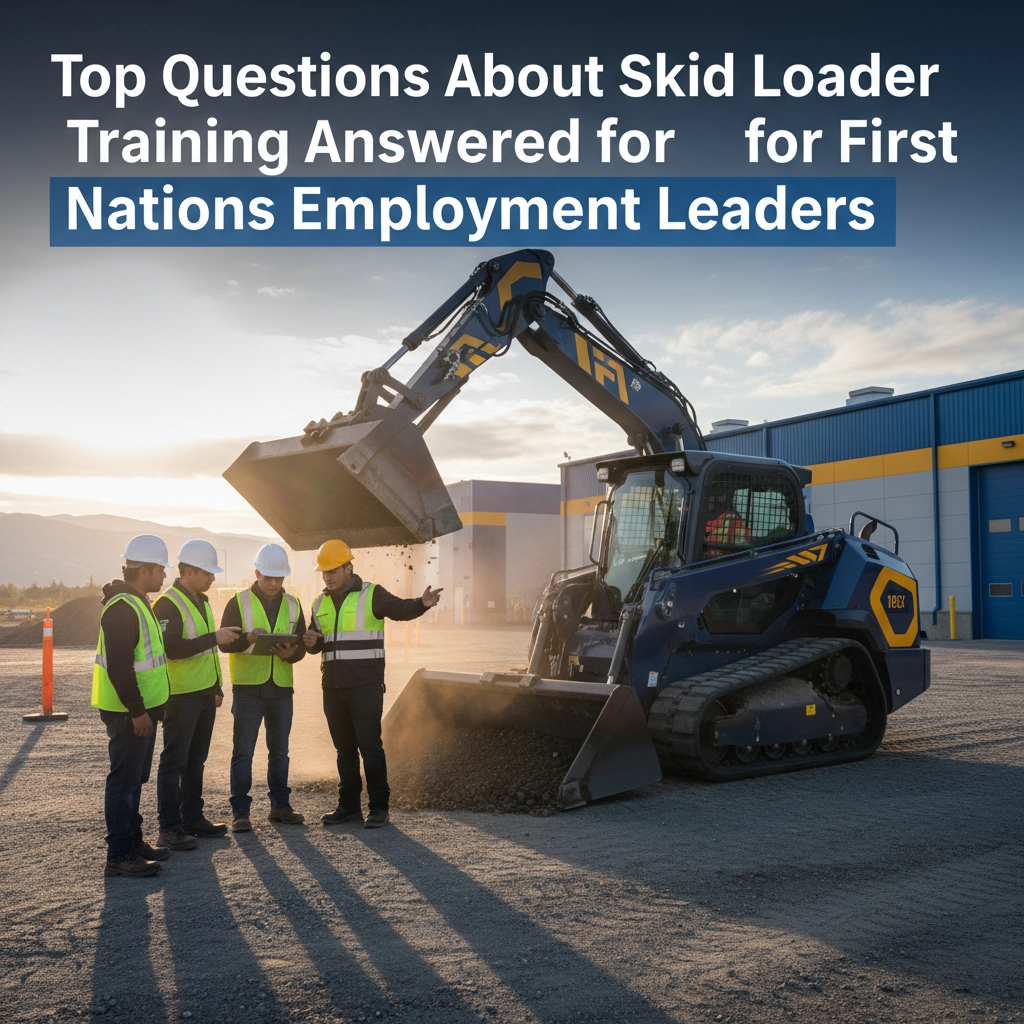
As employment and training coordinators in Manitoba First Nations communities, you're constantly evaluating programs that can create meaningful career pathways for your members. Skid loader operation represents one of those high-demand skills that opens doors in construction, landscaping, municipal work, and resource industries.
But navigating the training requirements can feel overwhelming. What certifications are actually required? How long does training take? What should you expect from a quality program?
Let's tackle the most common questions we hear from employment leaders across Manitoba's First Nations communities.
Last updated on October 1, 2026
What's new in this update
- Corrected the refresher training guidance to reflect a three-year cycle, with earlier retraining when conditions change.
- Updated Manitoba legal references to The Workplace Safety and Health Act, Manitoba Regulation 217/2006 Part 22, and CSA B335:25.
- Added the 2026 to 2027 Manitoba regulatory timeline for construction and prime contractor duties.
- Refreshed the funding section to note ISET and a current example of funded certification-focused training.
- Added a recent Manitoba enforcement example to strengthen the employer obligations section.
Do Skid Loader Operators Need a Special License?
No, operators don't need a commercial driver's license to operate skid loaders on job sites. This is different from transport trucks or other commercial vehicles your community members might be familiar with.
However, and this is crucial, employers are legally required to ensure operators receive proper training and certification before they're allowed to operate equipment. In Manitoba, that duty sits under The Workplace Safety and Health Act and Manitoba Regulation 217/2006, including Part 22 for powered mobile equipment. Untrained operators create serious safety risks and serious liability issues for employers.
The distinction matters for your employment programs: while no government-issued license is needed, industry-recognized training certification is absolutely essential for employability.

What Are the Legal Training Requirements for Employers?
Manitoba workplace safety rules require employers to ensure skid loader operators are properly trained and competent before operating equipment. This isn't optional, it's a legal requirement that creates real opportunities for your training programs.
In Manitoba, the main legal framework is The Workplace Safety and Health Act and Manitoba Regulation 217/2006, especially Part 22 for powered mobile equipment. Where lift truck training standards apply, the current operator training standard is CSA B335:25, which replaced CSA B335-15. The updated standard recognizes online learning and virtual reality simulation for instruction and evaluation, but it still requires a hands-on practical evaluation before an operator is considered competent.
The training must include three key components:
Theory Training: Covers operational principles, safety concepts, and hazard recognition
Hands-on Instruction: Practical training with qualified instructors using actual equipment
Competency Assessment: Testing that demonstrates proficiency in real work conditions
Employer obligations also matter from an enforcement standpoint. For example, Manitoba Natural Resources and Indigenous Futures was convicted on March 27, 2026 after a 2022 fatal ATV rollover, with three contraventions of the Workplace Safety and Health Regulation and a $100,000 fine. That case is a strong reminder that training, supervision, and safe equipment use are not paperwork issues. They are life-and-death responsibilities.
For employment coordinators, this creates a clear value proposition. Employers aren't just looking for willing workers, they need people who arrive with recognized training credentials that satisfy their legal obligations.
What Topics Are Actually Covered in Quality Training Programs?
Professional skid loader training programs cover far more than just "how to drive the machine." Here's what your community members should expect from comprehensive training:
Equipment Knowledge
- Skid loader anatomy and main components
- Different attachment types and their applications
- Pre-operation inspection procedures
- Understanding load capacity and stability factors
Safe Operating Procedures
- Proper startup and shutdown sequences
- Navigation in tight spaces and around obstacles
- Operating on different ground conditions and slopes
- Maintaining machine stability during operations
Hazard Recognition and Prevention
- Identifying buried utilities and overhead hazards
- Recognizing unstable ground conditions
- Understanding rollover and tip-over risks
- Pedestrian safety and worksite awareness protocols
Regulatory Compliance
- The Workplace Safety and Health Act and Manitoba Regulation 217/2006, including Part 22 for powered mobile equipment
- Documentation and inspection requirements
- Understanding employer expectations and current industry standards
This comprehensive approach means your program graduates aren't just certified, they're genuinely prepared for real workplace demands.

How Long Does Training Take and What Formats Are Available?
Training duration varies significantly based on format and depth. Here's what you can expect:
Online Theory Components: Can be completed in 90 minutes to 2 hours for basic certification
Hands-on Practical Training: Typically requires 4-8 hours with qualified instructors
Combined Programs: Full certification usually takes 1-2 days when theory and practical components are integrated
For employment programs serving multiple participants, many providers offer group rates and can customize scheduling around your community's needs. Some providers even offer on-site training, bringing equipment directly to your community, this can be particularly valuable for remote communities where transportation to training sites creates barriers.
The key is ensuring any program you choose includes both theory and hands-on components. Online-only certifications might seem convenient, but they don't satisfy employer requirements for practical competency demonstration.
What Does Certification Look Like When Training Is Complete?
Upon successful completion, participants receive:
Official Certificate: Industry-recognized documentation proving competency
Wallet Card: Portable proof of certification for job site access
Training Records: Detailed documentation for employer verification
Most programs require a minimum score of 70% on theory testing, plus demonstrated competency during practical assessments. The certification should clearly identify the training provider, completion date, and specific equipment types covered.
For your employment tracking purposes, reputable training providers maintain detailed records and can provide verification to potential employers when needed.
Are Annual Refresher Trainings Required?
No, annual refresher training is not the mandatory cycle in Manitoba. Under the recognized standard for lift truck certification, the normal retraining cycle is every three years, not every year.
Earlier retraining should happen sooner when there is:
- An incident or near miss
- Unsafe operation
- A change in equipment or attachments
- A change in the workspace or site conditions
- An extended period away from the machine
This matters for planning because communities do not need to budget for blanket yearly recertification if there has been no trigger for earlier retraining. At the same time, training should never be treated as one-and-done. When work conditions change, retraining may be needed well before the three-year mark.
It is also worth noting that CSA B335:25, released in May 2025, expects trainers to complete retraining at three-year intervals as well.
The refresher cycle still creates both challenges and opportunities for your employment programs:
Challenge: Ongoing training costs and time commitments
Opportunity: Regular touchpoints with your program graduates, potential for advanced training pathways, and demonstration of commitment to safety standards
Some providers offer streamlined refresher programs that focus on updates to regulations, equipment changes, and skills reinforcement rather than full re-certification. This can make follow-up training more manageable for both your budget and participants' schedules.

How Do You Evaluate Training Providers for Your Community?
Not all training programs are created equal. Here's what employment leaders should look for:
Accreditation and Recognition
- Training providers should be recognized by industry associations
- Certificates should be accepted by major employers in your region
- Programs should meet or exceed current Manitoba workplace safety requirements and recognized Canadian standards
Practical Training Components
- Access to actual equipment, not just simulators
- Qualified instructors with real industry experience
- Assessment in conditions similar to actual job sites
Flexibility for Indigenous Communities
- Willingness to provide on-site training in your community
- Group pricing for multiple participants
- Understanding of unique challenges faced by remote communities
Support Beyond Training
- Job placement assistance or employer connections
- Ongoing support for refresher training on the three-year cycle.
- Clear communication about certification maintenance requirements
What Are the Employment Outcomes You Should Expect?
Skid loader certification opens doors in several high-demand sectors:
Construction Industry: Residential and commercial building projects
Municipal Work: Snow removal, landscaping, utility maintenance
Resource Sectors: Mining support, forestry operations, pipeline work
Agriculture: Farm operations, feed lot management, general farm work
Typical starting wages for certified operators in Manitoba range from $18-25 per hour, with experienced operators earning $25-35+ per hour depending on location and industry sector.
For employment coordinators tracking outcomes, certified skid loader operators typically see job placement within 3-6 months of certification, with many finding full-time positions that provide benefits and advancement opportunities.
What Should Your Training Budget Include?
When budgeting for skid loader training initiatives, consider these components:
Initial Certification: $300-600 per participant depending on program format
Refresher Training on a Three-Year Cycle: $150-300 per participant when retraining is due, or earlier if a trigger event occurs
Transportation: Costs to bring participants to training sites or bring training to your community
Lost Wages: Compensation for participants during training time if applicable
On funding, ISET continues to be the main federal stream supporting Indigenous employment and skills training. As a current example of how funded pathways can work, a new 15-month Drinking Water Internship delivered with First Peoples Development Inc. and supported through ISET was introduced in September 2026. It shows how funded training can be tied to recognized certification and longer-term workforce development.
Many employment programs find that partnering with local employers can help offset costs. Some employers will hire conditionally and pay for training, while others may commit to interviewing program graduates or provide equipment for hands-on training components.

How Does This Fit Into Broader Employment Strategies?
Skid loader certification works particularly well as part of comprehensive employment pathways rather than standalone training. Consider how it connects with:
Construction Trade Preparation: Foundation skills for participants interested in heavy equipment operation
Municipal Employment: Preparation for public works positions within your community
Entrepreneurship Opportunities: Skills needed for members starting landscaping or construction businesses
Progressive Training Ladders: Entry point toward more advanced heavy equipment certifications
It is also important to watch the Manitoba regulatory timeline when planning future projects. M.R. 26/2026 was registered on March 20, 2026 and comes into force on April 1, 2027. Among other changes, it removes the construction site safety exemption for commercial, industrial, or institutional construction and renovation sites with more than 25 workers on site at any one time or buildings over 600 m2 or more than three storeys, and it adds prime contractor duties under section 4.7. For communities planning larger infrastructure work, that change may increase the value of building strong safety and equipment training systems now.
The relatively short training time and clear employment outcomes make skid loader certification an excellent "quick win" that can build confidence and momentum for participants in longer-term career development programs.
Making the Decision: Next Steps for Your Community
If skid loader training aligns with your community's employment priorities, here's how to move forward:
- Assess Local Demand: Connect with employers in your region to understand hiring needs and preferred training providers
- Evaluate Participants: Identify community members who would benefit most from certification
- Request Proposals: Get detailed quotes from multiple training providers, including options for on-site delivery
- Plan for Sustainability: Develop strategies for refresher training on the three-year cycle, including earlier retraining triggers, and potential expansion.
Remember, the goal isn't just certification: it's sustainable employment outcomes that strengthen your community's economic foundation.
For more information about professional training options that serve Manitoba First Nations communities, request a quote to discuss how we can support your employment initiatives.
More guides
Need your operators certified?
We bring the training to your site, on your own equipment. Tell us the machines and how many operators and we reply the same business day.