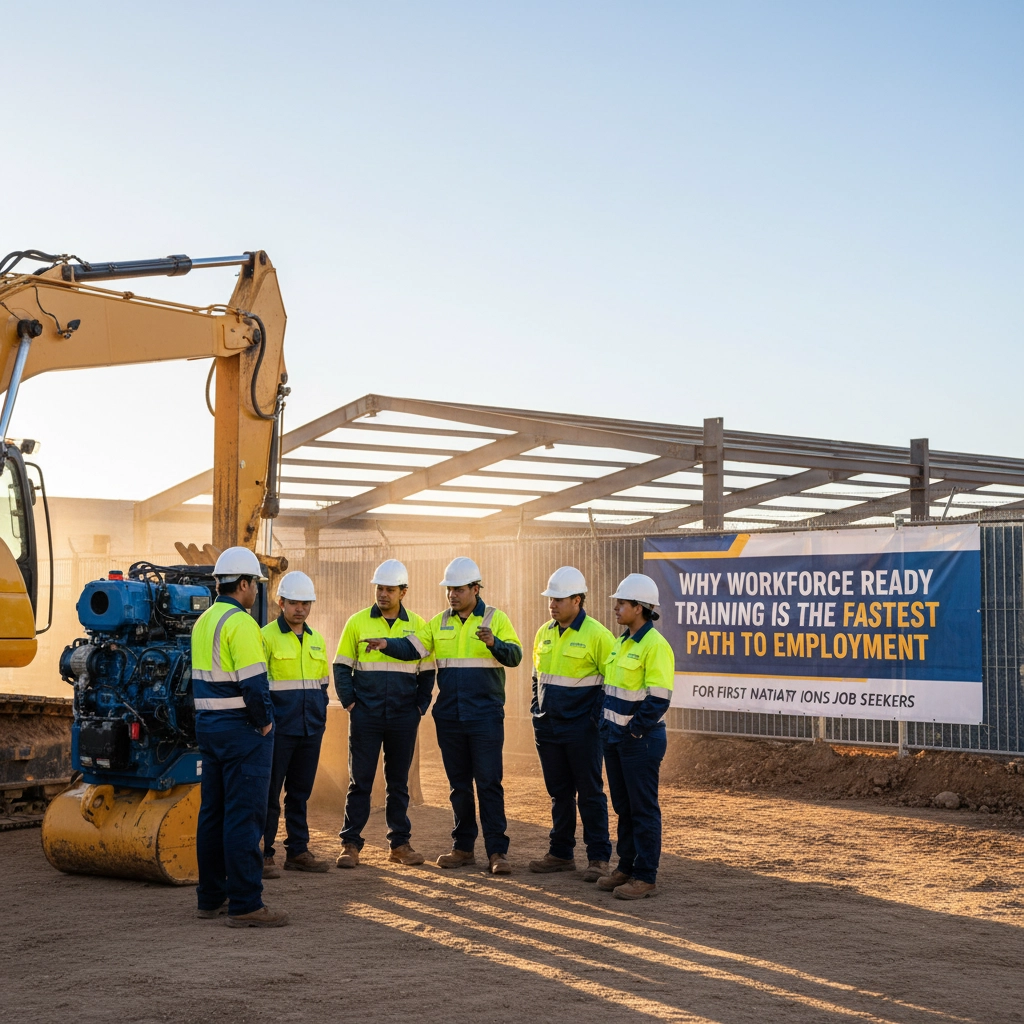
Why Workforce Ready Training Is the Fastest Path to Employment for First Nations Job Seekers
Why Workforce Ready is a fast path to jobs for First Nations job seekers: 1-3 week hands-on training, multiple certifications and ISET funding options.
Last updated on October 1, 2026
What's new in this update:
- Updated the funding section to reflect current ISET delivery in Manitoba through Indigenous service delivery organizations, tribal councils, and First Peoples Development Inc. (FPDI)
- Added a current funded training example: the 15-month Drinking Water Internship delivered with FPDI and supported through ISET
- Added Manitoba safety and regulatory context under The Workplace Safety and Health Act, Manitoba Regulation 217/2006 Part 22, and CSA B335:25
- Added the 2026 to 2027 Manitoba regulatory timeline and what it means for operator demand
- Added September 2026 mining and critical minerals context to the pathways discussion and removed generic unsourced outcome claims
For many First Nations job seekers in Manitoba, the path to sustainable employment can feel like navigating a maze of barriers: from educational requirements to transportation challenges to finding training that actually leads to real jobs. But there's a solution that's changing lives across Indigenous communities: Workforce Ready training programs.
These aren't your typical classroom courses. Workforce Ready training represents a direct, practical approach to employment that gets results fast. Here's why this training model has become the most effective pathway to employment for First Nations job seekers.
Breaking Down Traditional Employment Barriers
First Nations job seekers face unique challenges that traditional education and training programs often fail to address. Many require training that doesn't demand a high school diploma or driver's license as prerequisites. Others need flexible scheduling that accommodates family responsibilities or community commitments.
Workforce Ready training programs are specifically designed to remove these barriers. They focus on what employers actually need: capable, safety-conscious workers who can operate equipment and perform tasks effectively. The emphasis is on demonstrated competency rather than paper credentials.
This approach recognizes that many First Nations individuals possess strong work ethics, problem-solving abilities, and hands-on skills that translate directly to industrial and construction environments. What they need is certification and specific technical training to meet employer requirements.

Direct Pathways to High-Demand Jobs
The most significant advantage of Workforce Ready training is its direct connection to employment opportunities. Unlike academic programs that provide general knowledge, these training programs are developed in partnership with employers who have immediate hiring needs.
Programs focusing on heavy equipment operation, forklift certification, and construction skills address critical labor shortages in Manitoba's industrial sectors. Graduates emerge with certifications employers specifically request, making them immediately employable.
This matters even more now because Manitoba is also pushing to grow mineral production and critical minerals activity. September 2026 Winnipeg Free Press reporting noted that project activity is ramping up while First Nations training capacity is still lagging in some areas. In that environment, short, certification-focused training becomes especially valuable because it helps communities prepare people for real opportunities without waiting for long program buildouts or larger institutional changes.
For example, certified forklift operators in Manitoba can expect starting wages between $18-22 per hour, with experienced operators earning $25+ per hour. Heavy equipment operators often start at $22-28 per hour, with senior operators commanding $35+ per hour. These wages provide family-supporting income from day one.
Skills-Based Learning That Works
Workforce Ready training programs typically run 1-3 weeks, focusing intensively on specific skills rather than broad theoretical knowledge. This concentrated approach allows participants to gain job-ready competencies quickly without the time and financial investment of longer programs.
A typical heavy equipment program covers:
- Equipment operation and controls
- Safety protocols and regulations
- Pre-operational inspections
- Basic maintenance procedures
- Workplace communication
- Documentation and reporting
Participants spend significant time on actual equipment, not just in classrooms. This hands-on experience builds confidence and competency that employers can immediately recognize.

Comprehensive Support Services
What makes Workforce Ready training particularly effective for First Nations participants is the wraparound support that addresses common barriers to program completion and employment success.
Many programs include:
- Transportation assistance or coordination
- Childcare support during training hours
- Career counseling and job placement assistance
- Basic workplace readiness skills
- Cultural considerations and Indigenous teaching methods
- Ongoing mentorship during the transition to employment
This holistic approach recognizes that successful employment isn't just about technical skills: it's about removing obstacles that prevent people from accessing and completing training.
Proven Employment Outcomes
The strongest case for Workforce Ready training is practical, not theoretical. When training is short, specific, and tied to real jobs, participants can move into work faster than they usually can through longer general programs.
That matters because employers are often looking for people who can:
- show up ready to work safely
- follow site procedures
- use equipment properly
- meet certification requirements
- step into entry-level roles with less ramp-up time
For many First Nations participants, this kind of training works well because it focuses on a clear result: recognized certification and a direct pathway into work. Instead of relying on broad claims or generic statistics, it is more accurate to say these programs are valuable when they are tied to actual labour demand, practical skills, and funded access.
Accessible Funding Options
One of the most significant advantages for First Nations job seekers is the availability of funding specifically designed to support Indigenous workforce development. The main federal stream is the Indigenous Skills and Employment Training (ISET) program, delivered in Manitoba through Indigenous service delivery organizations, tribal councils, and organizations such as First Peoples Development Inc. (FPDI).
Common funding sources include:
- Indigenous Skills and Employment Training (ISET) program funding
- band-sponsored training initiatives, where a community is actively sponsoring participants
- Employment Insurance (EI) retraining benefits, where an individual is eligible and the training fits the program rules
As of September 2026, a current and concrete example is the new 15-month Drinking Water Internship delivered with First Peoples Development Inc. and supported through ISET. It shows how funded training can lead to recognized certification and direct employment pathways in essential infrastructure work.
Many participants complete training at little or no personal cost when funding is approved, with support that may cover tuition, required materials, and other participation costs depending on the program and funding partner.

Industry Recognition and Employer Confidence
Employers increasingly recognize the value of graduates from structured Workforce Ready programs. These training programs have developed strong reputations for producing reliable, safety-conscious workers who understand workplace expectations from day one.
Many employers maintain ongoing relationships with training providers, creating a pipeline for immediate hiring. Some companies specifically recruit from these programs because they know graduates have received practical, relevant training that translates directly to workplace productivity.
This employer confidence means program graduates often have multiple job opportunities upon completion, giving them bargaining power for better wages and working conditions.
Building Community Economic Strength
When First Nations individuals gain employment in skilled trades and industrial positions, the benefits extend beyond individual families to entire communities. Higher employment rates mean:
- Increased household income staying within communities
- More residents with skills that can support band-owned enterprises
- Reduced dependence on outside contractors for community projects
- Role models encouraging others to pursue similar training
- Stronger local economies with more purchasing power
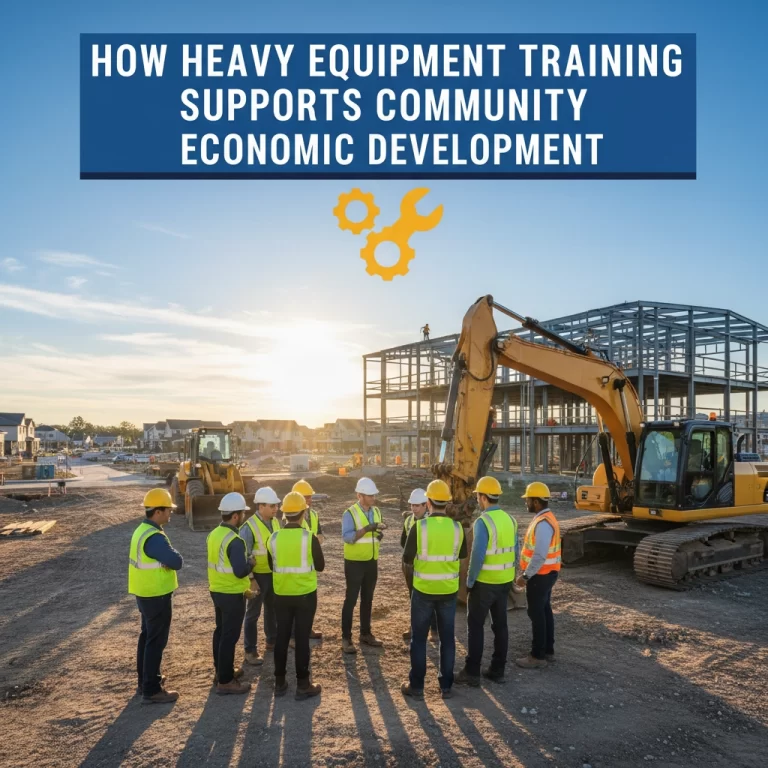
This ripple effect makes Workforce Ready training an investment in community economic development, not just individual employment.
The Speed Advantage
Traditional post-secondary programs often require 1-4 years of study before graduates are job-ready. Workforce Ready training delivers employment-ready skills in weeks, not years. This speed advantage is crucial for individuals who need income immediately or who cannot commit to long-term educational programs.
The focused curriculum eliminates courses that don't directly relate to job performance while ensuring participants master the specific competencies employers require. This efficiency means faster entry to employment and quicker return on training investment.

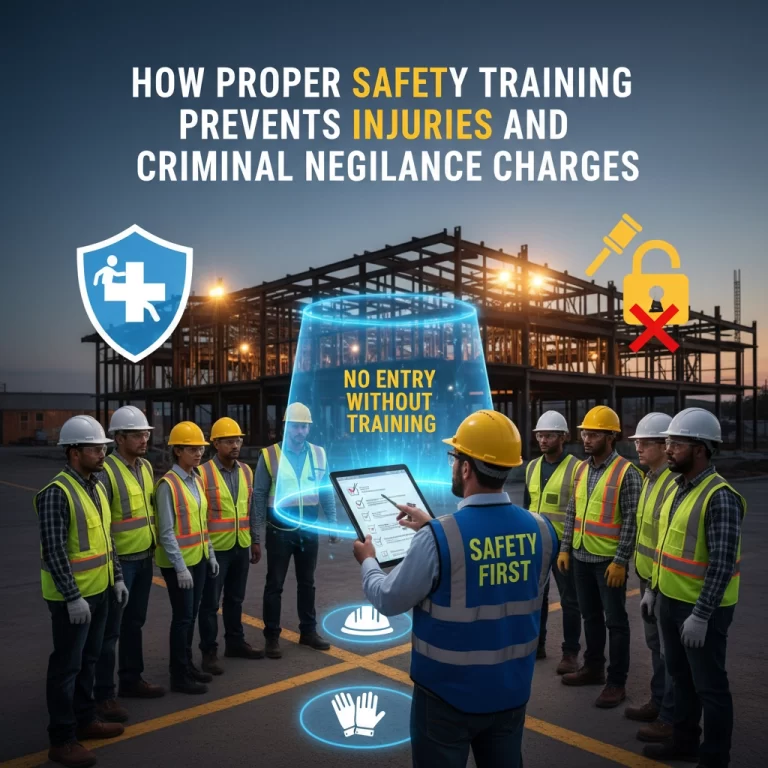
Safety Training That Protects Everyone
A critical component of effective Workforce Ready training is comprehensive safety education. Programs that meet industry standards don't just teach equipment operation: they emphasize safety protocols that protect workers and employers from accidents, injuries, and legal liability.
In Manitoba, that safety context sits under The Workplace Safety and Health Act and Manitoba Regulation 217/2006, including Part 22 for powered mobile equipment. That legal framework matters because training should reflect the real rules workers and employers are expected to follow on the job.
For lift truck operators, the current training standard is CSA B335:25, released in May 2025. It replaced CSA B335-15. The current standard recognizes online learning and virtual reality simulation as valid tools for instruction and evaluation, but hands-on practical evaluation on real equipment is still required. It also expects trainers to retrain every three years, which helps keep instruction current.
There is also an important Manitoba timeline to watch. M.R. 26/2026 was registered on March 20, 2026 and comes into force on April 1, 2027. It removes the construction site safety exemption for commercial, industrial, or institutional construction and renovation sites with more than 25 workers on site at any one time, or for buildings over 600 m2 or more than three storeys. It also adds prime contractor duties under section 4.7. As that change takes effect, certified operators are likely to be in even higher demand because larger sites will face clearer safety responsibilities and stronger pressure to document worker competency.
Proper safety training creates value for employers by reducing workplace incidents, insurance claims, and potential criminal negligence charges. For workers, it provides knowledge that literally saves lives and prevents career-ending injuries.
Multiple Certification Pathways
Many Workforce Ready programs offer training on multiple types of equipment or multiple related skills within a single program. For example, a construction equipment program might include certifications for:
- Skid steer loaders
- Telehandlers
- Small excavators
- Rough terrain forklifts
- Aerial work platforms
This multi-certification approach increases graduates' versatility and employment options while providing better value for training investment.

Getting Started
For First Nations job seekers interested in Workforce Ready training, the first step is connecting with local employment counselors or band economic development offices to discuss funding options and program availability.
Most programs have straightforward application processes and can accommodate various scheduling needs. The key is taking action: these programs consistently deliver results for participants who commit to completing the training and transitioning to employment.
Workforce Ready training represents more than just job preparation: it's a pathway to economic independence, community contribution, and career advancement that builds from strengths First Nations individuals already possess. For those ready to invest a few weeks in focused training, it's proven to be the fastest route to meaningful, family-supporting employment.
The combination of practical skills training, employer partnerships, comprehensive support, and accessible funding makes Workforce Ready programs uniquely effective for First Nations job seekers. In a challenging employment landscape, this focused approach delivers the results that matter most: good jobs, good wages, and economic stability for individuals and communities.
More guides
Need your operators certified?
We bring the training to your site, on your own equipment. Tell us the machines and how many operators and we reply the same business day.