How Heavy Equipment Training Supports Community Economic Development
How heavy equipment training helps First Nations grow local economies: stable jobs, skilled operators for band-owned work and fewer outside contractors.
Last updated on October 1, 2026
What's new in this update
- Replaced U.S. wage and growth figures with Manitoba-focused wage ranges and demand context
- Added current Manitoba construction safety changes under M.R. 26/2026
- Added current lift truck training context under CSA B335:25
- Added a 2026 Manitoba enforcement example to support the need for competent operators and documented procedures
- Verified existing links and removed outdated unsupported claims
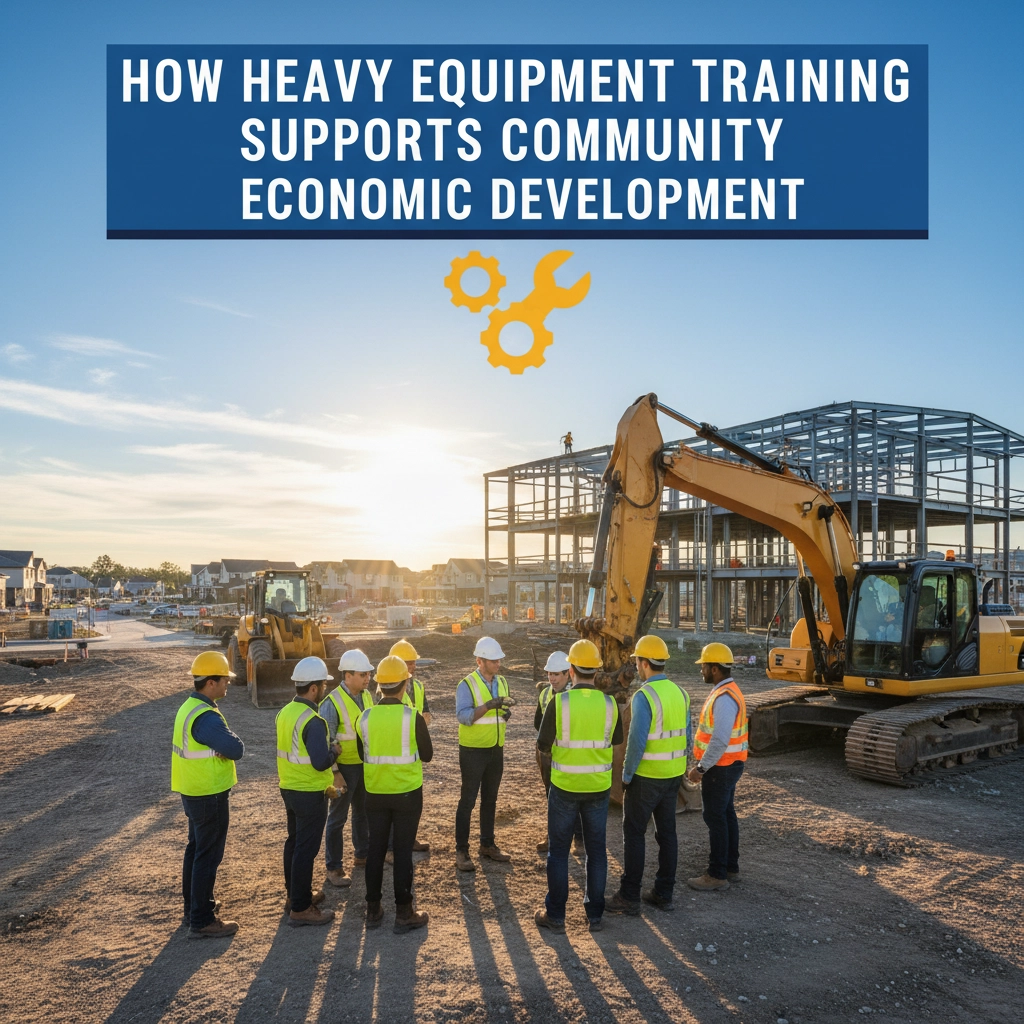
When First Nations communities invest in heavy equipment training programs, they're not just teaching job skills: they're building the foundation for lasting economic growth. The ripple effects of skilled training extend far beyond individual paychecks, creating a cycle of prosperity that strengthens entire communities across Manitoba and beyond.
Let's examine how strategic workforce development in heavy equipment operation becomes a powerful engine for community economic development.
Breaking the Cycle: From Unemployment to Family Income Stability
The most immediate impact of heavy equipment training is transforming unemployment into stable, well-paying careers. In Manitoba, certified skid steer and heavy equipment operators typically start around $22-28 per hour, while experienced operators often reach $30-35+ per hour. Forklift operators commonly start around $16-22 per hour, with experienced rates reaching about $26 per hour. These are typical local ranges, not audited statistics, but they show why equipment skills can make a real difference for household income.
When a community member completes comprehensive training in skid steer operation, forklift certification, or excavator operation, they're positioned to earn wages that support not just themselves, but their extended families. This income stability has a multiplier effect throughout the community as families can invest in housing improvements, education for their children, and local businesses.
Demand in Manitoba remains strong across construction, warehousing, infrastructure, and resource development. That makes equipment training a practical workforce investment for communities that want more members ready for current opportunities.

Building Internal Capacity: Skilled Workers for Band-Owned Operations
Many First Nations communities operate their own construction companies, infrastructure projects, and maintenance services. Heavy equipment training creates a pool of certified operators who can work directly for band-owned enterprises, keeping both wages and profits within the community.
Consider the impact when a First Nation doesn't need to hire outside operators for road maintenance, building construction, or facility improvements. Instead of watching those wages leave the community, they circulate locally: spent at the band store, invested in community events, and reinvested in local housing and infrastructure.
Band-owned companies with access to certified local operators can take on larger projects and compete more effectively for contracts. This internal capacity building means communities can respond quickly to opportunities without waiting for outside contractors to become available.
Reducing Economic Leakage: Less Reliance on Outside Contractors
One of the most significant economic impacts of developing local expertise is reducing the community's reliance on outside contractors. Every time a First Nation hires external contractors for projects that could be handled by local workers, money flows out of the community economy.
Current Manitoba conditions make local training capacity even more important. As reported by the Winnipeg Free Press in September 2026, Manitoba's mining and critical minerals expansion is increasing demand for skilled workers while First Nations training capacity still lags behind the opportunity. When a First Nation can provide its own certified forklift operators, excavator operators, and safety-trained personnel, they gain more control over project timelines and costs while keeping economic benefits local.
This shift from economic dependence to self-sufficiency strengthens community resilience. Projects can begin faster, costs are more predictable, and the community builds valuable institutional knowledge about managing complex operations.

Creating Career Pathways: From Entry-Level to Leadership
Heavy equipment training doesn't just create jobs: it creates career pathways that can span decades. An operator who starts with basic forklift certification can advance to specialized equipment, supervisory roles, and eventually start their own contracting business.
These career progressions matter enormously for community economic development. Young people who see clear paths from training to good-paying careers are more likely to stay in their home communities rather than migrate to urban centers for opportunities. This retention of human capital strengthens the community's long-term economic prospects.
Moreover, experienced operators often become mentors and trainers themselves, creating a sustainable cycle of skill development within the community. This internal capacity for ongoing training reduces long-term costs and ensures the community can adapt to new technologies and opportunities.
Quantifiable Economic Impact: The Numbers Tell the Story
The economic impact of workforce development in heavy equipment operation is measurable and substantial.
On a practical local level, trained operators tend to work more consistently, follow safer procedures, and use equipment with better control than untrained workers. For a community running multiple pieces of equipment year-round, that can mean less avoidable damage, fewer delays, lower rework, and better day-to-day productivity.
These gains compound over time. A community that invests in proper training often sees reduced equipment maintenance costs, fewer incidents and delays, and stronger productivity across projects. These savings can be reinvested in additional training, equipment purchases, or community development initiatives. The value is not only in wages earned, but also in work done right the first time.

Supporting Infrastructure Development: Building for the Future
Communities with locally trained heavy equipment operators can tackle infrastructure projects that might otherwise be cost-prohibitive. Road improvements, facility construction, and utility installations become more feasible when the community has certified operators on hand.
This work also sits within a changing Manitoba safety framework. M.R. 26/2026 was registered on March 20, 2026 and comes into force on April 1, 2027. It removes the construction site safety exemption for commercial, industrial, or institutional construction and renovation sites with more than 25 workers on site at any one time or buildings over 600 m2 or more than three storeys, and it adds prime contractor duties under section 4.7. For communities planning larger projects, that makes trained operators, documented procedures, and clear site coordination even more important.
This infrastructure development creates additional economic opportunities. Better roads support tourism and business development. Improved facilities can attract new residents and businesses. Utility improvements support both residential growth and commercial development.
The construction and maintenance of this infrastructure also provides ongoing employment opportunities for trained operators, creating a sustainable cycle of economic activity within the community.
Strategic Workforce Investment: Planning for Long-Term Growth
Successful community economic development requires strategic thinking about workforce investment. Heavy equipment training programs like those offered through Onsite Training Services provide communities with the flexibility to respond to changing economic opportunities.
Whether it's supporting resource development projects, infrastructure expansion, or emergency response capabilities, communities with trained equipment operators are better positioned to capitalize on opportunities and address challenges. This adaptability is crucial for long-term economic resilience.
Where lift trucks are part of the plan, communities should also understand the current training baseline. CSA B335:25, released in May 2025, replaced CSA B335-15 and is the recognized baseline for lift truck operator training. It recognizes online and virtual reality simulation for instruction and evaluation, while also expecting trainers to retrain every three years. That gives communities more flexibility in how training is delivered while keeping expectations current.
The investment in training also demonstrates to potential partners and funding organizations that the community is serious about economic development and has the capacity to manage complex projects effectively.
Creating Economic Multipliers: Beyond Direct Employment
The economic benefits of heavy equipment training extend well beyond direct employment. Trained operators often start their own small businesses, providing services to neighboring communities and creating additional employment opportunities.
Family incomes from equipment operation support local retailers, service providers, and other businesses. Children of equipment operators often pursue post-secondary education, bringing additional skills back to the community. The economic confidence that comes from stable employment encourages other investments and business development.
There is also a risk management side to this multiplier effect. On March 27, 2026, Manitoba Natural Resources and Indigenous Futures was convicted after a 2022 fatal ATV rollover, with three Workplace Safety and Health Regulation contraventions and a $100,000 fine. For community organizations, that is a reminder that competent operators, clear safe work procedures, and documented training do more than improve output. They also help protect workers, leadership, and community-owned operations.
These multiplier effects mean that every dollar invested in training can generate several dollars in broader economic activity within the community over time.
Conclusion: Training as Economic Development Strategy
Heavy equipment training represents more than skills development: it's a comprehensive economic development strategy that addresses multiple community needs simultaneously. From immediate employment creation to long-term capacity building, strategic workforce investment creates the foundation for sustainable community prosperity.
For First Nations communities looking to strengthen their economic future, heavy equipment training offers a proven pathway to reduced dependency, increased local capacity, and improved quality of life for community members.
Contact Workforce Ready to plan equipment operator training for your community.
More guides
Need your operators certified?
We bring the training to your site, on your own equipment. Tell us the machines and how many operators and we reply the same business day.